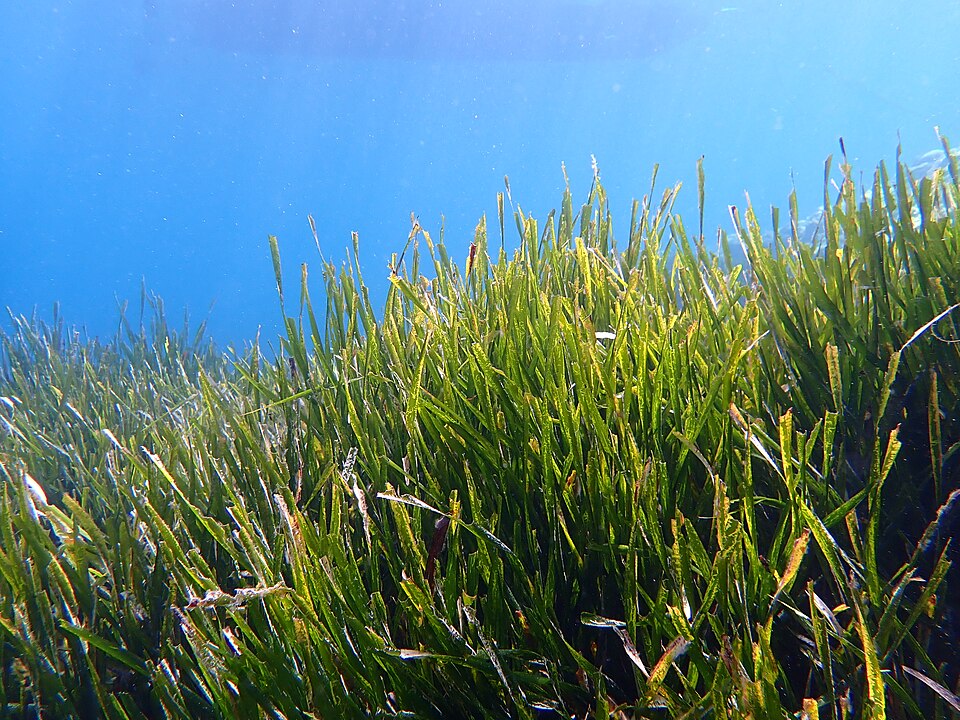

Posidonia oceanica, commonly known as Neptune grass or Mediterranean tapeweed, is a seagrass species that is endemic to the Mediterranean Sea. The mapping of submerged seagrass meadows in the Mediterranean has recently benefited from advanced artificial intelligence techniques. It forms large underwater meadows that are an important part of the ecosystem. The fruit is free floating and known in Italy as "the olive of the sea" (l'oliva di mare). Balls of fibrous material from its foliage, known as egagropili or Neptune balls, wash up to nearby shorelines.
From Wikipedia, under CC BY-SA 4.0.
Is it poisonous?
We have no record of Neptune Grass being toxic, poisonous or venomous. That is not proof that it is safe. Never eat, touch or handle a wild plant, mushroom or animal on the strength of an identification; ask someone qualified.
Easily confused with
Classification
- Kingdom
- Plantae
- Phylum
- Tracheophyta
- Class
- Liliopsida
- Order
- Alismatales
- Family
- Posidoniaceae
- Genus
- Posidonia
- Species
- Posidonia oceanica
Found one? Take a photo and B.inomen will suggest what it is, free.
Check your photo