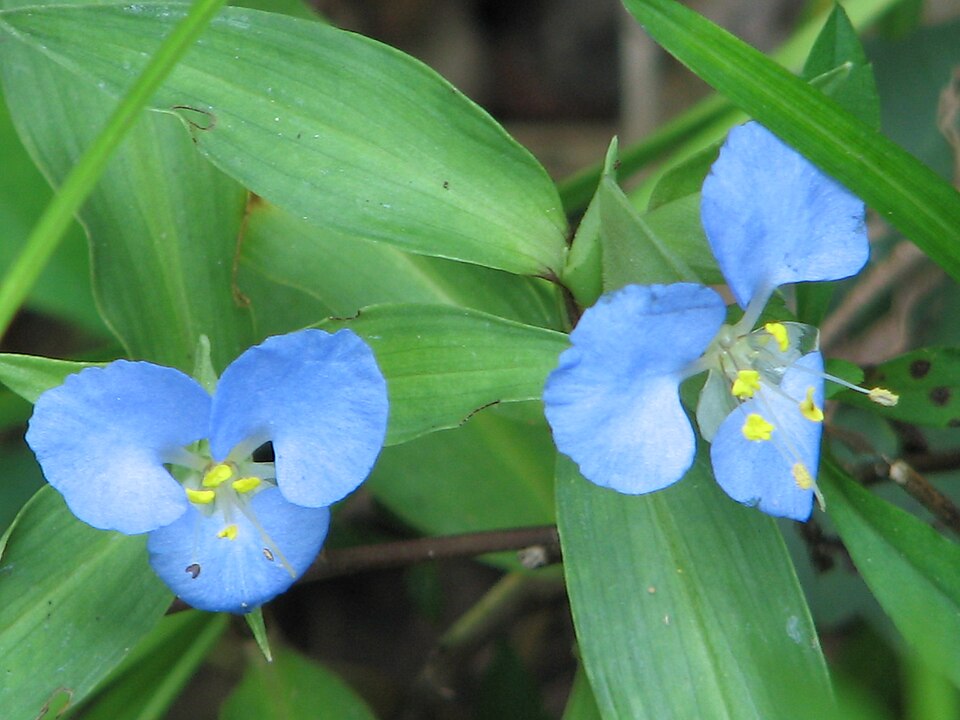

Commelina virginica, commonly known as the Virginia dayflower, is a perennial herbaceous plant in the dayflower family. It is native to the mideastern and southeastern United States, where it is typical of wet soils. While most members of the genus have thin, fibrous roots, the Virginia dayflower is unusual for its genus in having a perennial rhizome. The plant was first described by Carl Linnaeus in his 1762 publication of the second edition of Species Plantarum.
From Wikipedia, under CC BY-SA 4.0.
Is it poisonous?
We have no record of Virginia Dayflower being toxic, poisonous or venomous. That is not proof that it is safe. Never eat, touch or handle a wild plant, mushroom or animal on the strength of an identification; ask someone qualified.
Easily confused with
Classification
- Kingdom
- Plantae
- Phylum
- Tracheophyta
- Class
- Liliopsida
- Order
- Commelinales
- Family
- Commelinaceae
- Genus
- Commelina
- Species
- Commelina virginica
Found one? Take a photo and B.inomen will suggest what it is, free.
Check your photo