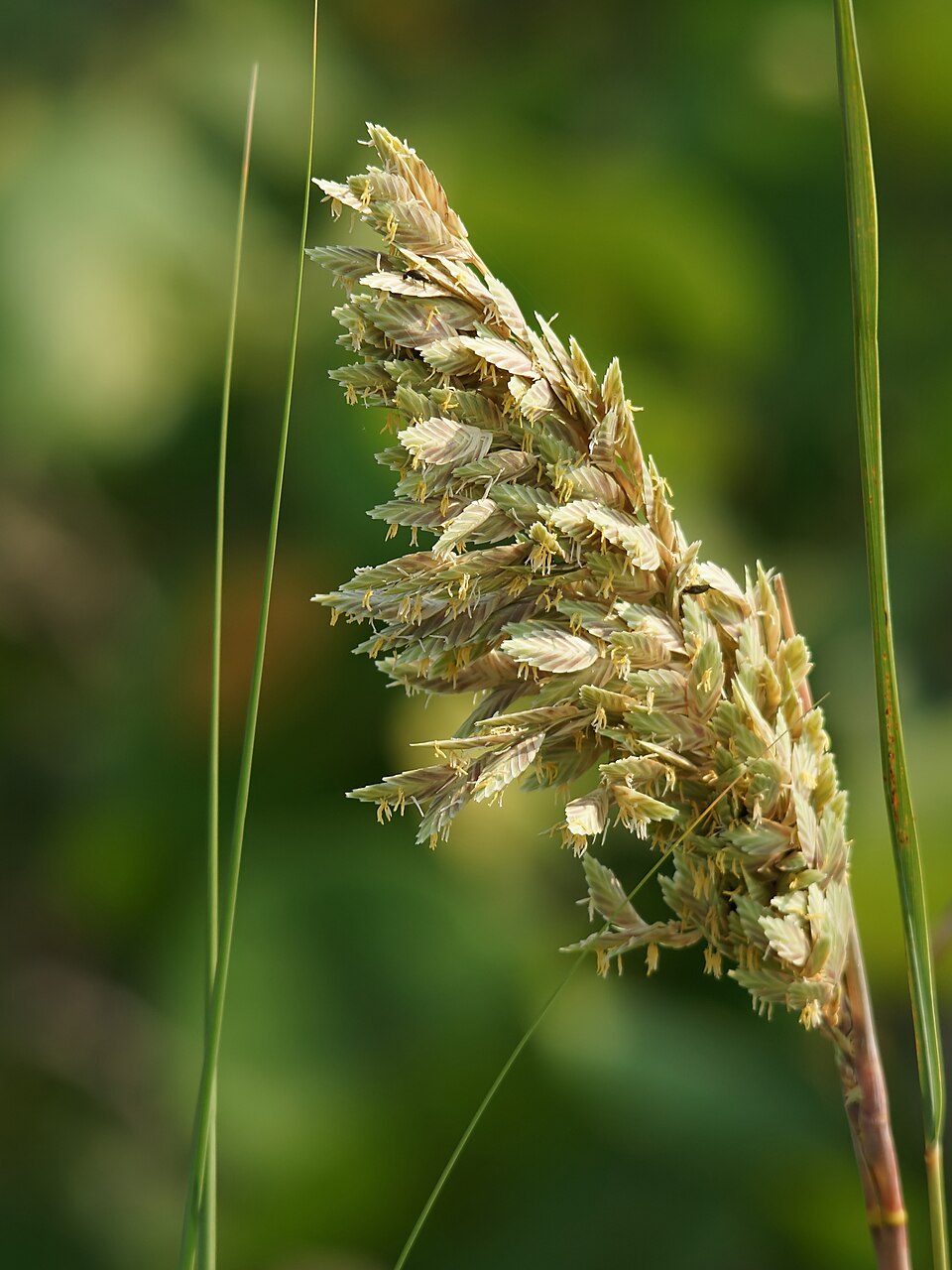

Uniola paniculata, also known as sea oats, seaside oats, araña, and arroz de costa, is a tall subtropical grass that is an important component of coastal sand dune and beach plant communities in the southeastern United States, eastern Mexico and some Caribbean islands. Its large seed heads that turn golden brown in late summer give the plant its common name. Its tall leaves trap wind-blown sand and promote sand dune growth, while its deep roots and extensive rhizomes act to stabilize them, so the plant helps protect beaches and property from damage due to high winds, storm surges and tides. It also provides food and habitat for birds, small animals and insects.
From Wikipedia, under CC BY-SA 4.0.
Is it poisonous?
We have no record of Sea oats being toxic, poisonous or venomous. That is not proof that it is safe. Never eat, touch or handle a wild plant, mushroom or animal on the strength of an identification; ask someone qualified.
Classification
- Kingdom
- Plantae
- Phylum
- Tracheophyta
- Class
- Liliopsida
- Order
- Poales
- Family
- Poaceae
- Genus
- Uniola
- Species
- Uniola paniculata
Found one? Take a photo and B.inomen will suggest what it is, free.
Check your photo