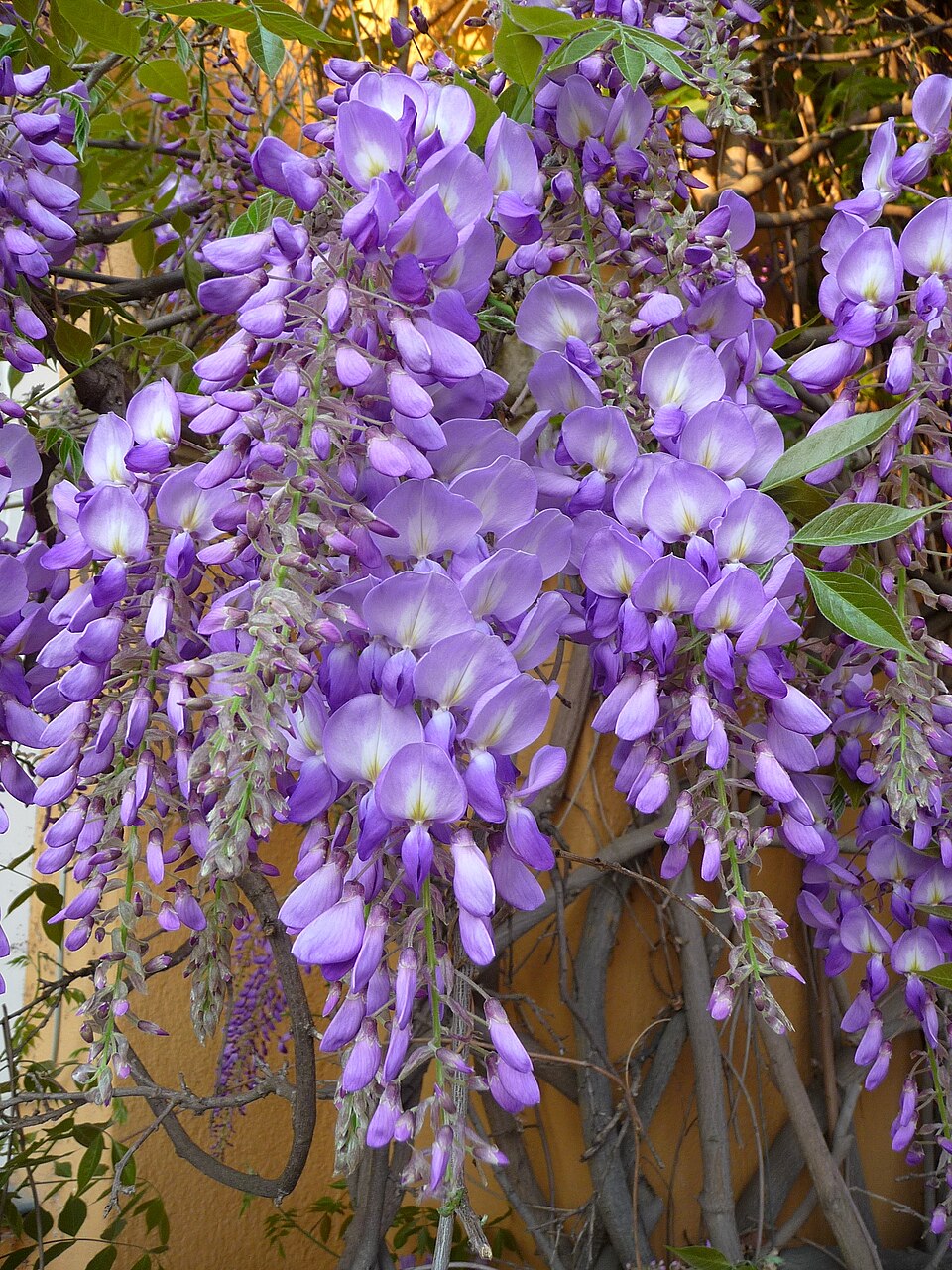

Wisteria sinensis, commonly known as the Chinese wisteria, is a species of flowering plant in the pea family, native to China, in the provinces of Guangxi, Guizhou, Hebei, Henan, Hubei, Shaanxi, and Yunnan. Growing 20–30 m (66–98 ft) tall, it is a deciduous vine. It is widely cultivated in temperate regions for its twisting stems and masses of scented flowers in hanging racemes, in spring.
From Wikipedia, under CC BY-SA 4.0.
Is it poisonous?
Considered toxic. Public sources list it as such; we have not verified this individually. All parts of the plant contain a glycoside called wisterin which is toxic if ingested and may cause nausea, vomiting, stomach pains, and diarrhea. Wisterias have caused poisoning in children of many countries, producing… Never eat, touch or handle a wild plant, mushroom or animal on the strength of an identification; ask someone qualified.
Easily confused with
- Wisteria floribunda — considered toxic
- Wisteria frutescens — considered toxic
Classification
- Kingdom
- Plantae
- Phylum
- Tracheophyta
- Class
- Magnoliopsida
- Order
- Fabales
- Family
- Fabaceae
- Genus
- Wisteria
- Species
- Wisteria sinensis
Found one? Take a photo and B.inomen will suggest what it is, free.
Check your photo