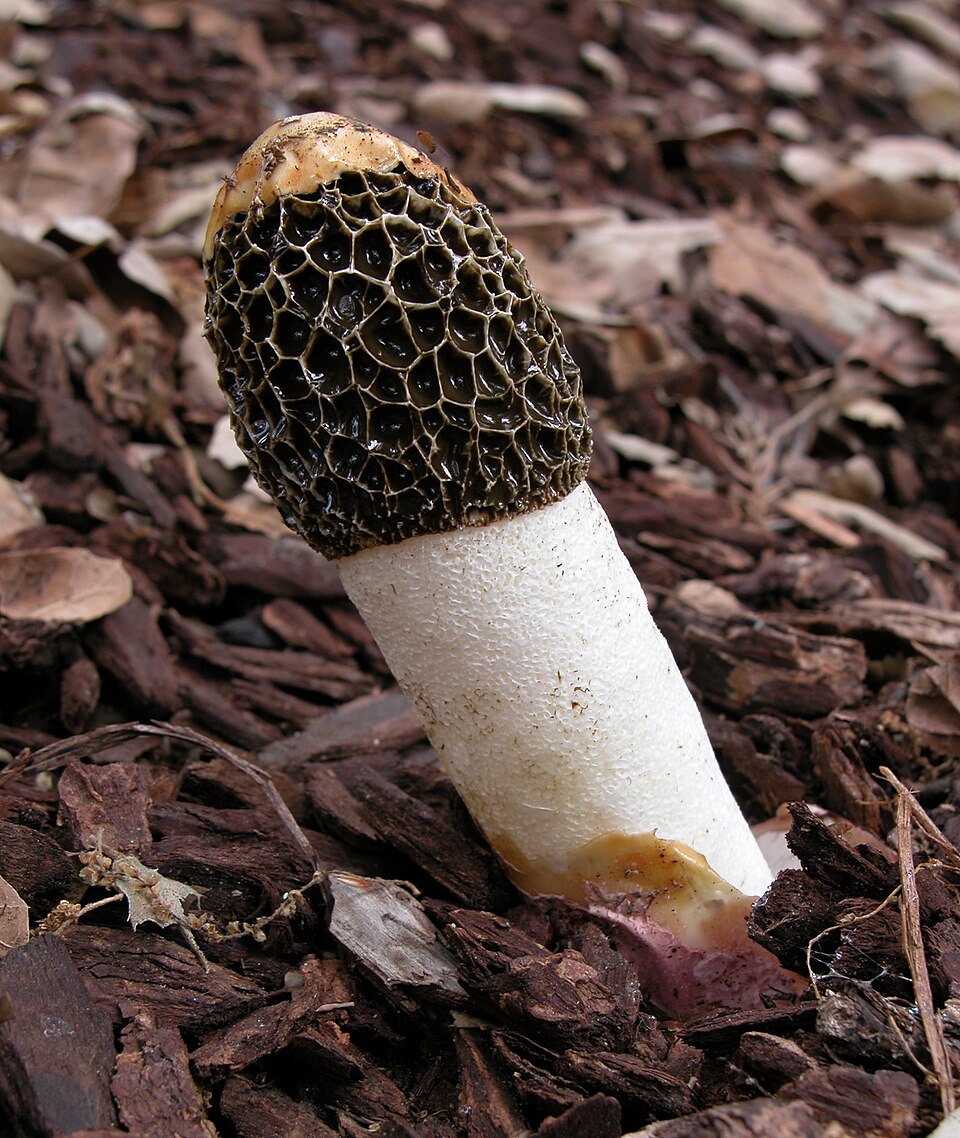

Phallus hadriani, commonly known as the dune stinkhorn, Hadrian's stinkhorn or the sand stinkhorn, is a species of fungus in the Phallaceae (stinkhorn) family. The stalk of the fruit body reaches up to 20 cm (8 in) tall by 4 cm (1+1⁄2 in) thick, and is spongy, fragile, and hollow. At the top of the stem is a ridged and pitted, thimble-like cap over which is spread olive-colored spore slime (gleba). Shortly after emerging, the gleba liquefies and releases a fetid odor that attracts insects, which help disperse the spores. P. hadriani may be distinguished from the similar P.
From Wikipedia, under CC BY-SA 4.0.
Is it poisonous?
We have no record of Dune stinkhorn being toxic, poisonous or venomous. That is not proof that it is safe. Never eat, touch or handle a wild plant, mushroom or animal on the strength of an identification; ask someone qualified.
Easily confused with
- Itajahya galericulata
- Phallus duplicatus
- Phallus impudicus
- Phallus granulosodenticulatus
- Phallus sibiricus
Classification
- Kingdom
- Fungi
- Phylum
- Basidiomycota
- Class
- Agaricomycetes
- Order
- Phallales
- Family
- Phallaceae
- Genus
- Phallus
- Species
- Phallus hadriani
Found one? Take a photo and B.inomen will suggest what it is, free.
Check your photo