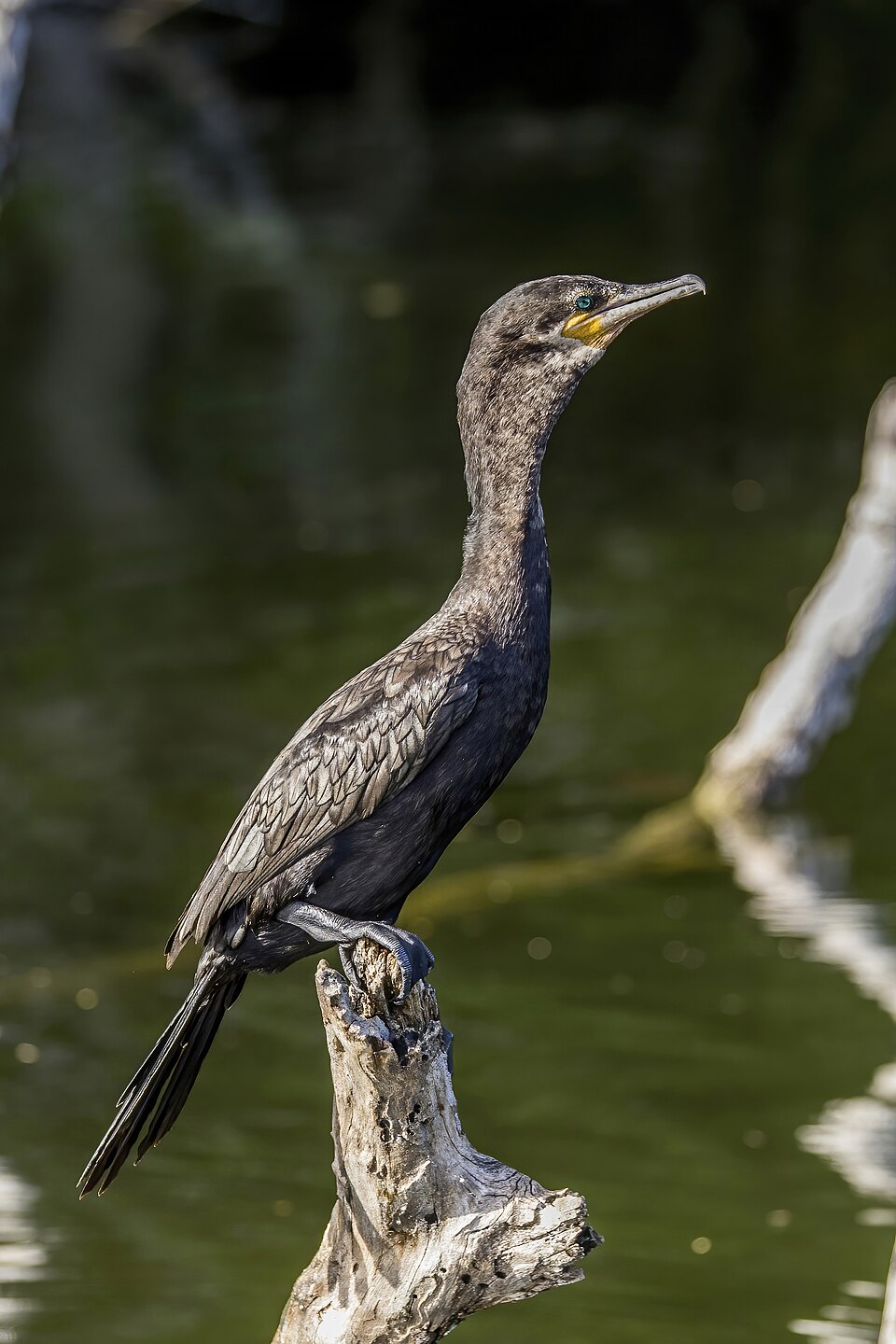

The neotropic cormorant or olivaceous cormorant (Nannopterum brasilianum) is a medium-sized cormorant found throughout the American tropics and subtropics, from the middle Rio Grande and the Gulf and Californian coasts of the United States south through Mexico and Central America to southern South America, where it is called by the indigenous name of biguá. It also breeds in the Bahamas, Cuba, and Trinidad. It can be found both on coasts (including some mangrove areas) and in inland waters. There are at least two subspecies: N. b. mexicanum from Nicaragua northwards and N. b. brasilianum further south. In Peru, the neotropic cormorant is used by the Uru people for fishing.
From Wikipedia, under CC BY-SA 4.0.
Is it venomous or poisonous?
We have no record of Neotropic Cormorant being toxic, poisonous or venomous. That is not proof that it is safe. Never eat, touch or handle a wild plant, mushroom or animal on the strength of an identification; ask someone qualified.
Easily confused with
- Phalacrocorax fuscicollis
- Nannopterum auritum
- Phalacrocorax sulcirostris
- Microcarbo pygmaeus
- Phalacrocorax carbo
- Microcarbo niger
Classification
- Kingdom
- Animalia
- Phylum
- Chordata
- Class
- Aves
- Order
- Suliformes
- Family
- Phalacrocoracidae
- Genus
- Nannopterum
- Species
- Nannopterum brasilianum
Found one? Take a photo and B.inomen will suggest what it is, free.
Check your photo