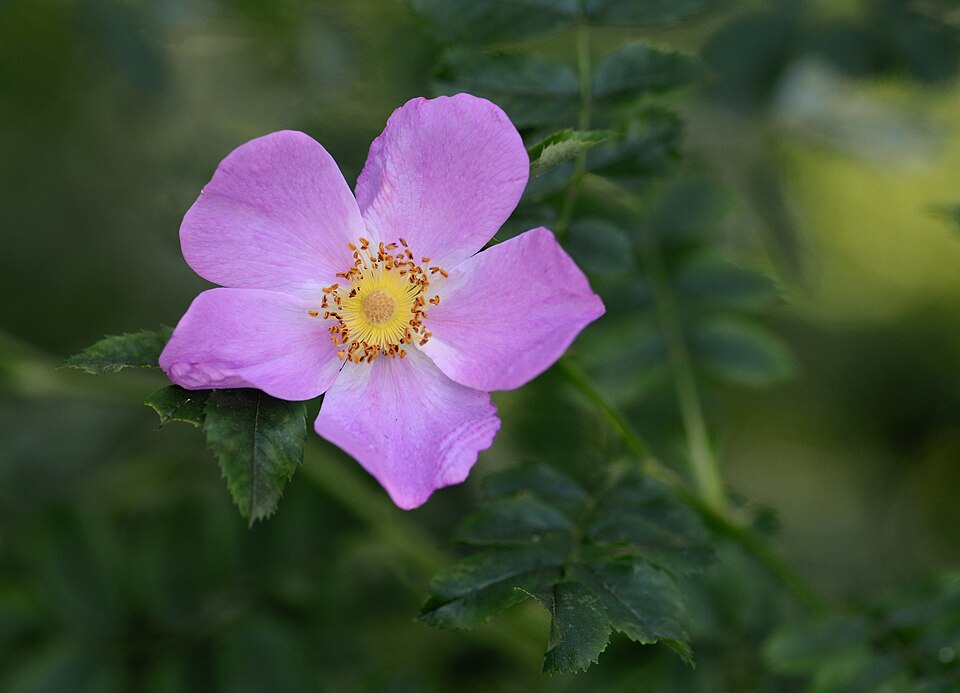

Rosa virginiana, commonly known as the Virginia rose, common wild rose or prairie rose, is a woody perennial in the rose family native to eastern North America, where it is the most common wild rose. It is deciduous, forming a suckering shrub up to 2 metres in height, though often less. The stems are covered in numerous hooked prickles. The leaves are pinnate, usually with between 7 and 9 glossy leaflets. The pink flowers are borne singly or in small clusters and appear over a long period in midsummer. The fruits are small, round and bright red, rich in vitamin C and edible, being both used to make jams and tea. It grows in clearings, thickets, and shores.
From Wikipedia, under CC BY-SA 4.0.
Is it poisonous?
We have no record of Virginian Rose being toxic, poisonous or venomous. That is not proof that it is safe. Never eat, touch or handle a wild plant, mushroom or animal on the strength of an identification; ask someone qualified.
Easily confused with
Classification
- Kingdom
- Plantae
- Phylum
- Tracheophyta
- Class
- Magnoliopsida
- Order
- Rosales
- Family
- Rosaceae
- Genus
- Rosa
- Species
- Rosa virginiana
Found one? Take a photo and B.inomen will suggest what it is, free.
Check your photo