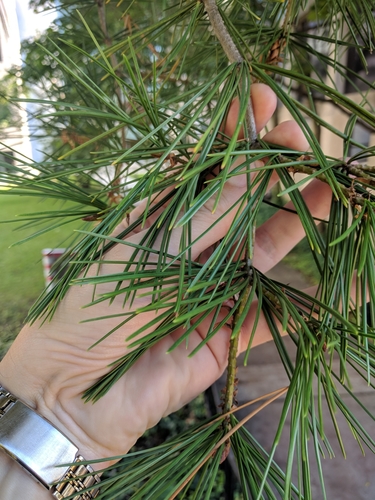
Pinus bungeana (Chinese: 白皮松; pinyin: báipísōng; Japanese: シロマツ; Korean: 백송; RR: baeksong), also known by the common names Bunge's pine, lacebark pine and white-barked pine, is a pine tree native to northeastern and central China. It is a slow-growing tree that can grow to heights of 15–25 metres (49–82 ft) is frost hardy down to below −26 °C (−15 °F). Its smooth, grey-green bark gradually sheds in round scales to reveal patches of pale yellow, which turn olive-brown, red and purple on exposure to light.
From Wikipedia, under CC BY-SA 4.0.
Is it poisonous?
We have no record of Lacebark pine being toxic, poisonous or venomous. That is not proof that it is safe. Never eat, touch or handle a wild plant, mushroom or animal on the strength of an identification; ask someone qualified.
Easily confused with
- Pinus parviflora
- Pinus morrisonicola
- Pinus densiflora
- Pinus tabuliformis
- Pinus maximartinezii
- Sciadopitys verticillata
Classification
- Kingdom
- Plantae
- Phylum
- Tracheophyta
- Class
- Pinopsida
- Order
- Pinales
- Family
- Pinaceae
- Genus
- Pinus
- Species
- Pinus bungeana
Found one? Take a photo and B.inomen will suggest what it is, free.
Check your photo