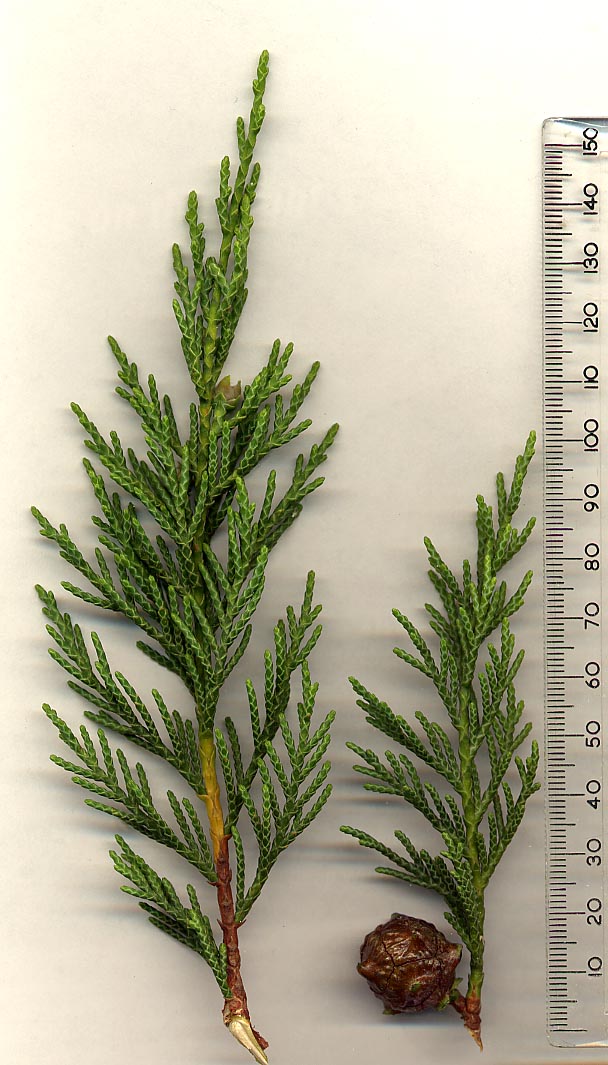

The Leyland cypress, Cupressus × leylandii, × Cuprocyparis leylandii or × Cupressocyparis leylandii, often referred to simply as leylandii, is a fast-growing coniferous tree much used in horticulture, primarily for hedges and screens. Even on sites of relatively poor culture, plants have been known to grow to heights of 15 metres (49 ft) in 16 years. Their rapid, thick growth means they are sometimes used to achieve privacy, but such use can result in disputes with neighbours whose own property becomes overshadowed. The tree is a hybrid of Monterey cypress (Cupressus macrocarpa) and Nootka cypress (Cupressus nootkatensis). It is almost always sterile, and is propagated mainly by cuttings.
From Wikipedia, under CC BY-SA 4.0.
Is it poisonous?
We have no record of Leyland cypress being toxic, poisonous or venomous. That is not proof that it is safe. Never eat, touch or handle a wild plant, mushroom or animal on the strength of an identification; ask someone qualified.
Easily confused with
- Chamaecyparis pisifera
- Chamaecyparis lawsoniana
- Chamaecyparis obtusa
- Platycladus orientalis
- Juniperus chinensis
- Cupressus pendula
Classification
- Kingdom
- Plantae
- Phylum
- Tracheophyta
- Class
- Pinopsida
- Order
- Pinales
- Family
- Cupressaceae
- Species
- × Hesperotropsis leylandii
Found one? Take a photo and B.inomen will suggest what it is, free.
Check your photo