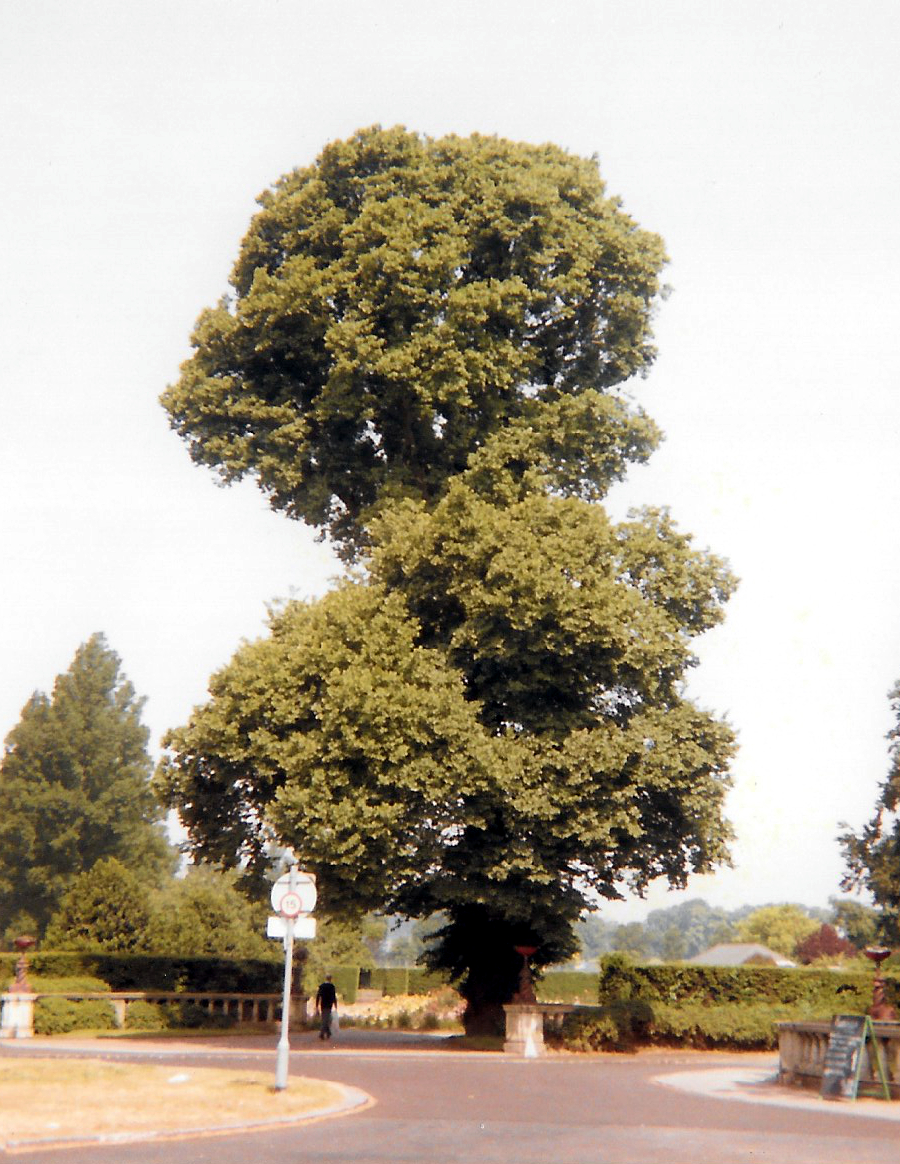

The field elm (Ulmus minor) cultivar 'Atinia' , commonly known as the English elm, formerly common elm and horse may, and more lately the Atinian elm, was, before the spread of Dutch elm disease, the most common field elm in central southern England, though not native there, and one of the largest and fastest-growing deciduous trees in Europe. R. H. Richens noted that elm populations exist in north-west Spain, northern Portugal, and on the Mediterranean coast of France that "closely resemble the English elm" and appear to be "trees of long standing" in those regions rather than recent introductions.
From Wikipedia, under CC BY-SA 4.0.
Is it poisonous?
We have no record of English Elm being toxic, poisonous or venomous. That is not proof that it is safe. Never eat, touch or handle a wild plant, mushroom or animal on the strength of an identification; ask someone qualified.
Easily confused with
Classification
- Kingdom
- Plantae
- Phylum
- Tracheophyta
- Class
- Magnoliopsida
- Order
- Rosales
- Family
- Ulmaceae
- Genus
- Ulmus
- Species
- Ulmus procera
Found one? Take a photo and B.inomen will suggest what it is, free.
Check your photo