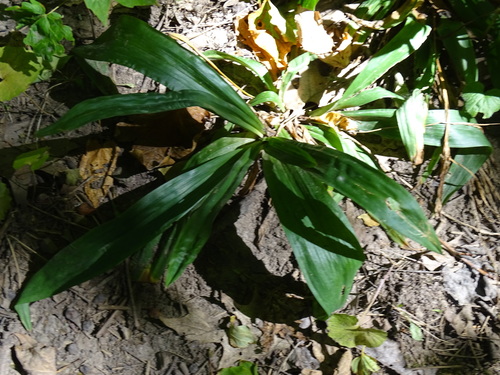
Carex albursina, commonly known as the White bear sedge or blunt-scaled wood sedge, is a wide-leaved sedge that typically grows in moist deciduous or mixed woods in eastern North America. It was named after White Bear Lake in east central Minnesota, where it was discovered by Edmund Perry Sheldon in the 1890s. The leaves are 10–38 mm (3⁄8–1+1⁄2 inches) wide and 10–35 cm (4–14 inches) long.
From Wikipedia, under CC BY-SA 4.0.
Is it poisonous?
We have no record of White Bear Sedge being toxic, poisonous or venomous. That is not proof that it is safe. Never eat, touch or handle a wild plant, mushroom or animal on the strength of an identification; ask someone qualified.
Easily confused with
Classification
- Kingdom
- Plantae
- Phylum
- Tracheophyta
- Class
- Liliopsida
- Order
- Poales
- Family
- Cyperaceae
- Genus
- Carex
- Species
- Carex albursina
Found one? Take a photo and B.inomen will suggest what it is, free.
Check your photo