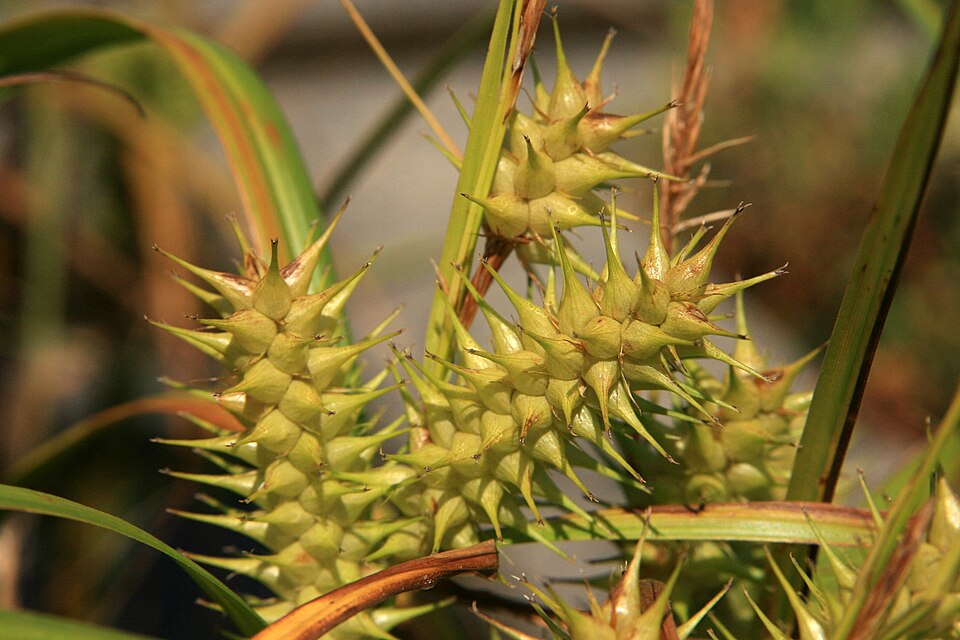

Carex lupuliformis, common name false hop sedge, is a perennial sedge of sporadic distribution found in the floodplain forests and ephemeral woodland ponds of central and eastern North America. The species typically produces four to seven leaves with sheaths of distal leaves of 3 to 21 cm whose ligules are rounded to triangular. Carex lupuliformis blooms between early June and early October, typically with "two to six proximal female spikes, distal spikes usually crowded, ascending, densely flowered, usually cylindric, much longer than broad; one to two terminal male spikes." Fruiting occurs between late July through early October.
From Wikipedia, under CC BY-SA 4.0.
Is it poisonous?
We have no record of False hop sedge being toxic, poisonous or venomous. That is not proof that it is safe. Never eat, touch or handle a wild plant, mushroom or animal on the strength of an identification; ask someone qualified.
Easily confused with
Classification
- Kingdom
- Plantae
- Phylum
- Tracheophyta
- Class
- Liliopsida
- Order
- Poales
- Family
- Cyperaceae
- Genus
- Carex
- Species
- Carex lupuliformis
Found one? Take a photo and B.inomen will suggest what it is, free.
Check your photo