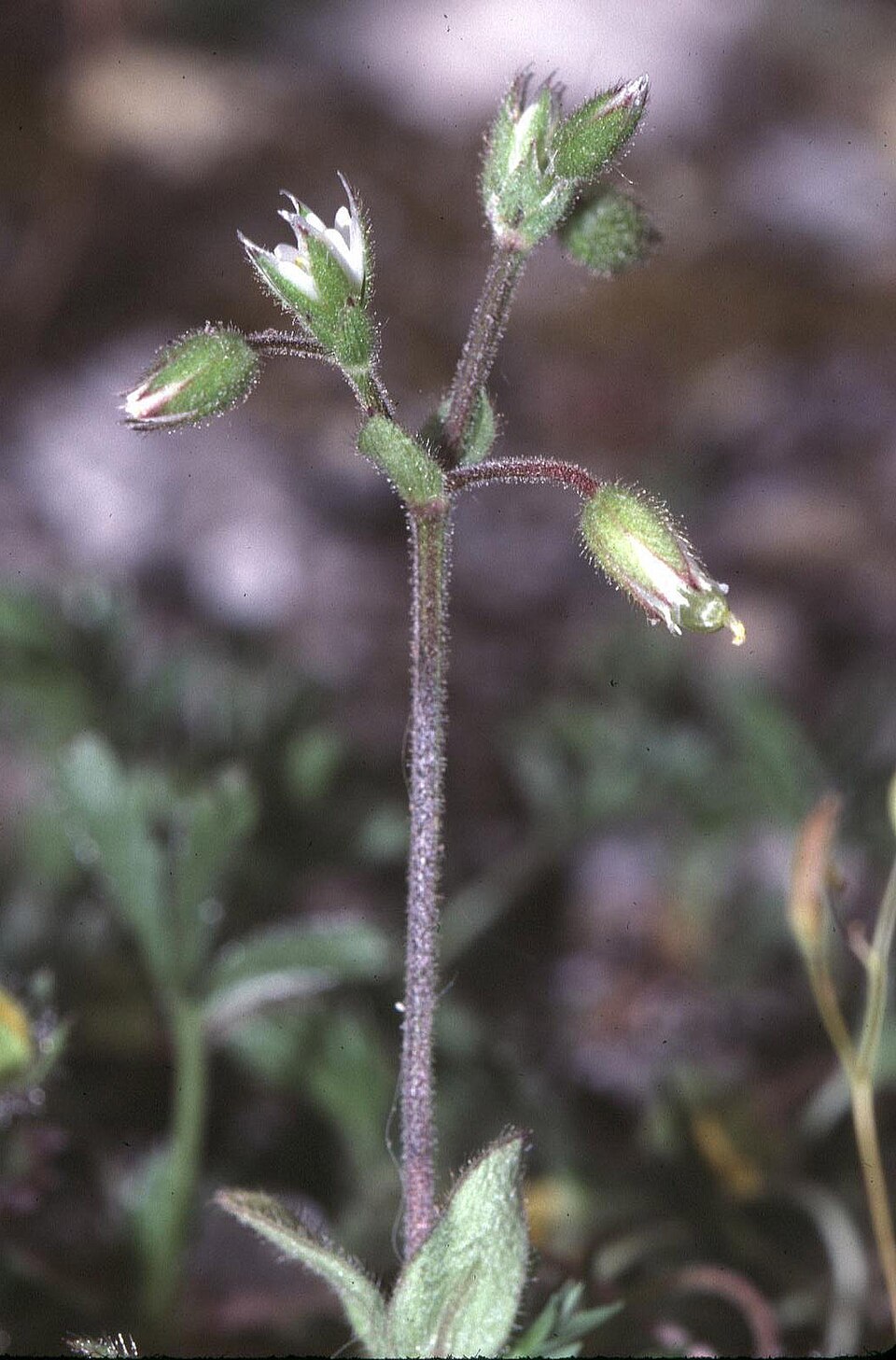

Cerastium pumilum, the dwarf mouse-ear or European chickweed, is an annual or biannual herbaceous plant, between 2 and 20 cm (0.8 and 7.9 in) high, native to Central and western Europe. The petals of the white flowers are shorter or equally long as the sepals, and split in the middle, up to a quarter of the length. The fruit petioles stand diagonal to the stems, often bent over at their top. Flowering occurs between March and May. Rarely occurs on the seacoast.
From Wikipedia, under CC BY-SA 4.0.
Is it poisonous?
We have no record of Dwarf Mouse-ear being toxic, poisonous or venomous. That is not proof that it is safe. Never eat, touch or handle a wild plant, mushroom or animal on the strength of an identification; ask someone qualified.
Easily confused with
- Cerastium semidecandrum
- Cerastium subtetrandrum
- Cerastium brachypetalum
- Cerastium diffusum
- Cerastium holosteoides
- Cerastium capense
Classification
- Kingdom
- Plantae
- Phylum
- Tracheophyta
- Class
- Magnoliopsida
- Order
- Caryophyllales
- Family
- Caryophyllaceae
- Genus
- Cerastium
- Species
- Cerastium pumilum
Found one? Take a photo and B.inomen will suggest what it is, free.
Check your photo