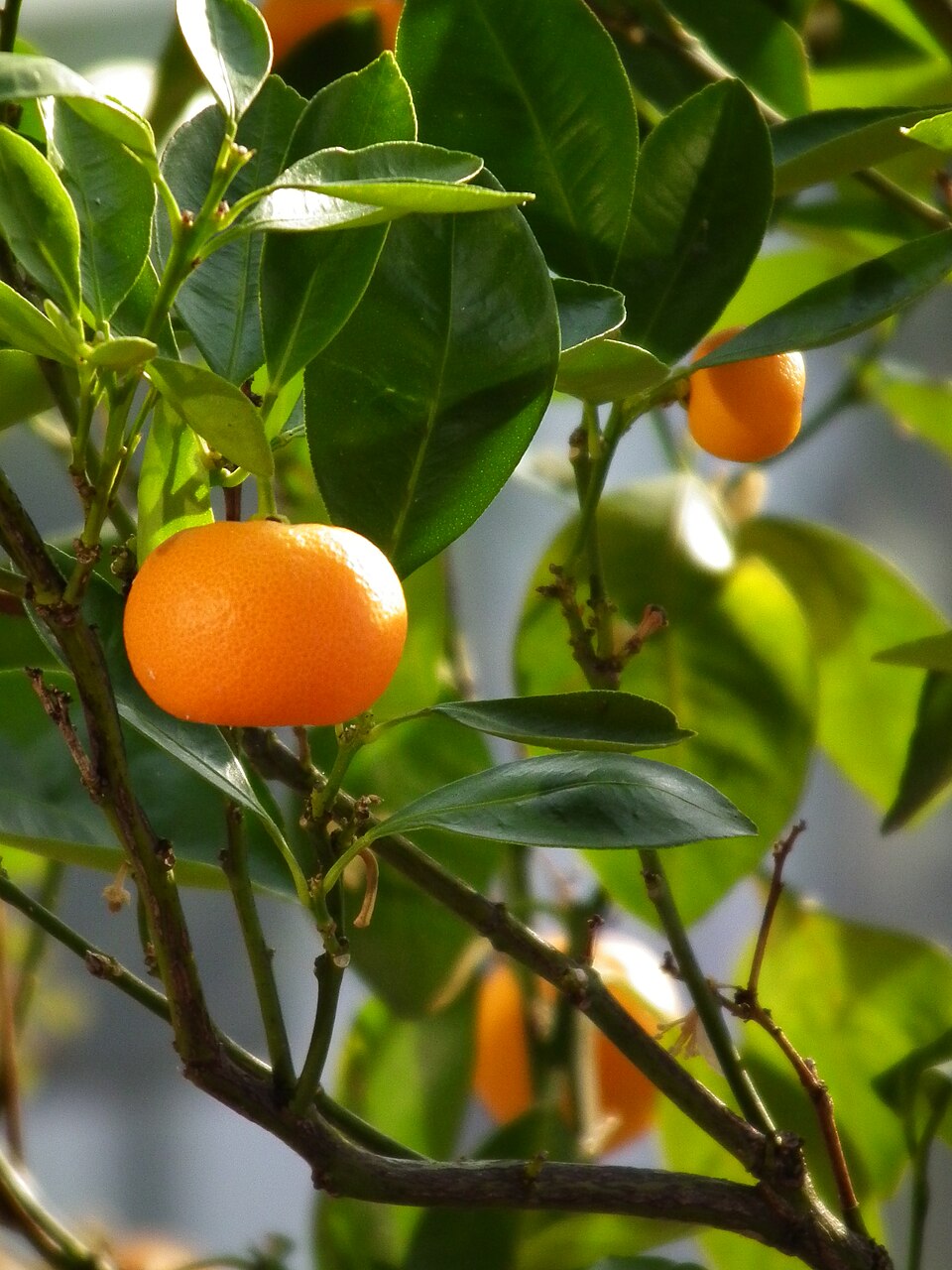

A mandarin orange (Citrus reticulata), often simply called mandarin, is a small, rounded citrus tree fruit. Treated as a distinct species of orange, it is usually eaten plain or in fruit salads. The mandarin is small and oblate, unlike the roughly spherical sweet orange (which is a mandarin-pomelo hybrid). The taste is sweeter and stronger than the common orange. A ripe mandarin orange is firm to slightly soft, heavy for its size, and pebbly-skinned. The peel is thin and loose, with little white mesocarp, so they are usually easier to peel and to split into segments. Hybrids have these traits to lesser degrees. The mandarin orange is tender and is damaged easily by cold.
From Wikipedia, under CC BY-SA 4.0.
Is it poisonous?
Considered toxic. Public sources list it as such; we have not verified this individually. The note covers its whole genus. Most citrus fruits, including lemon (Citrus limon), lime, and orange (Citrus × sinensis), among others, are known to contain aromatic oils, the terpenes limonene and linalool, and the furanocoumarin psoralen, which are… Never eat, touch or handle a wild plant, mushroom or animal on the strength of an identification; ask someone qualified.
Easily confused with
- Citrus deliciosa — considered toxic
- Citrus medica — considered toxic
- Citrus hystrix — considered toxic
- Citrus japonica — considered toxic
- Citrus maxima — considered toxic
Classification
- Kingdom
- Plantae
- Phylum
- Tracheophyta
- Class
- Magnoliopsida
- Order
- Sapindales
- Family
- Rutaceae
- Genus
- Citrus
- Species
- Citrus reticulata
Found one? Take a photo and B.inomen will suggest what it is, free.
Check your photo