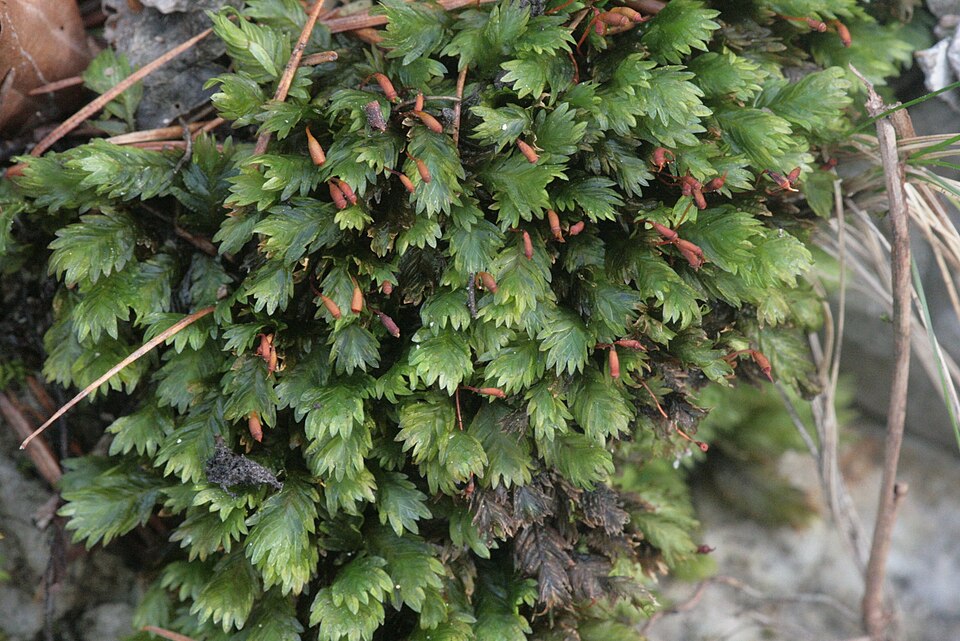

Fissidens dubius, commonly known as the rock-pocket moss, is a species of moss belonging to the family Fissidentaceae. First described by Palisot de Beauvois in 1805 from material collected in Philadelphia, it is a relatively large moss growing up to 5 cm (2 in) tall that forms loose to dense mats on calcareous substrates. The species is characterised by its serrated leaf margins, pale border of thick-walled cells, and typically dioicous reproduction. It has a broad global distribution across Europe, North and South America, Asia, North Africa, and New Zealand, occurring in various habitats from lowlands to alpine zones, particularly in shaded locations on basic soils and rocks.
From Wikipedia, under CC BY-SA 4.0.
Is it poisonous?
We have no record of Rock Pocket-moss being toxic, poisonous or venomous. That is not proof that it is safe. Never eat, touch or handle a wild plant, mushroom or animal on the strength of an identification; ask someone qualified.
Easily confused with
- Fissidens adianthoides
- Fissidens taxifolius
- Fissidens osmundioides
- Fissidens asplenioides
- Fissidens bryoides
- Fissidens polyphyllus
Classification
- Kingdom
- Plantae
- Phylum
- Bryophyta
- Class
- Bryopsida
- Order
- Dicranales
- Family
- Fissidentaceae
- Genus
- Fissidens
- Species
- Fissidens dubius
Found one? Take a photo and B.inomen will suggest what it is, free.
Check your photo