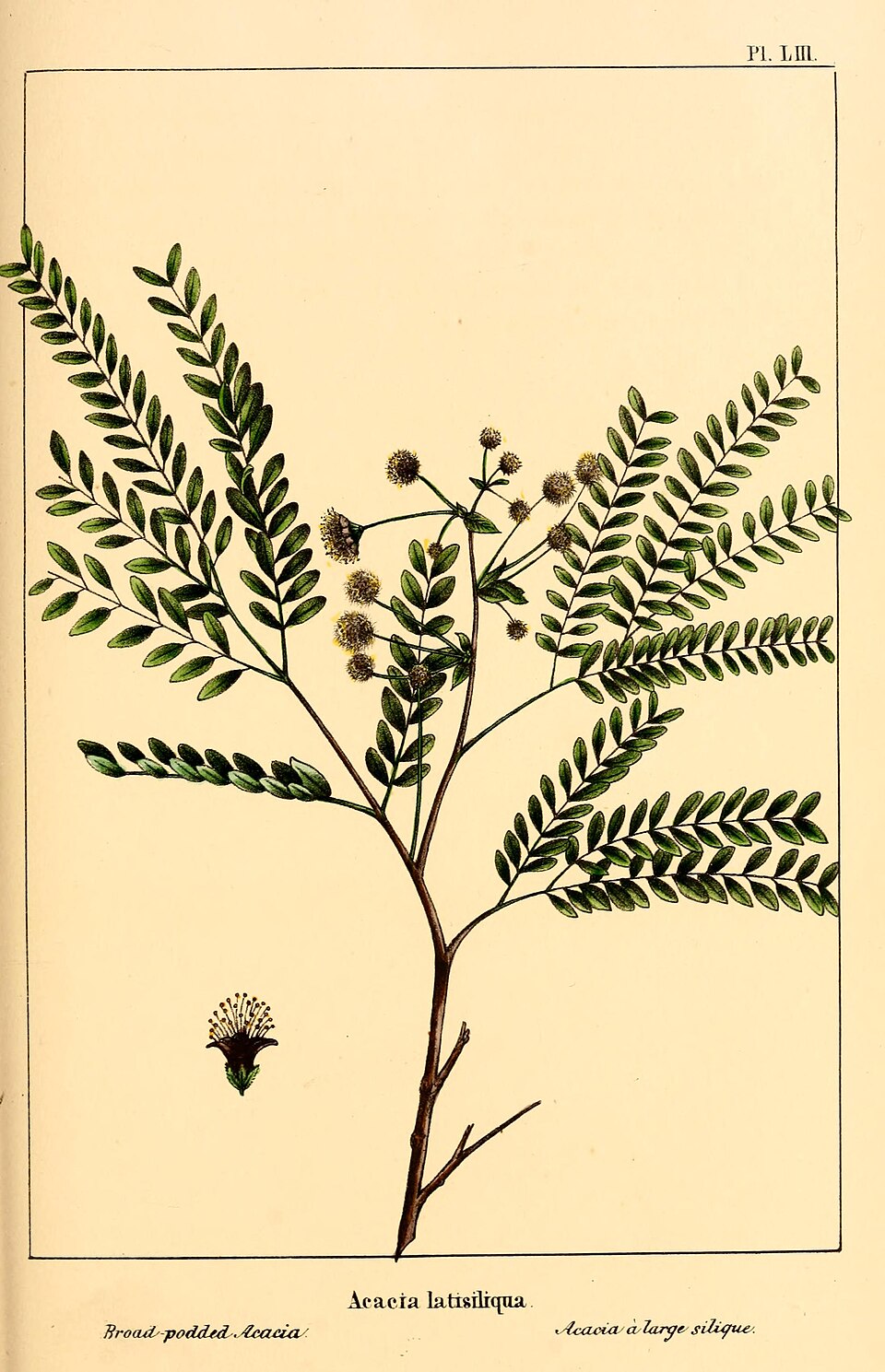

Lysiloma latisiliquum, commonly known as false tamarind or wild tamarind, is a species of tree in the family Fabaceae, that is native to southern Florida in the United States, the Bahamas, Cuba, southern Mexico, and Belize. Its wood is sometimes traded as sabicu wood. The tannin-rich leaves have anti-parasitic properties, and are eaten by sheep as an adaptation to alleviate nematode infections.
From Wikipedia, under CC BY-SA 4.0.
Is it poisonous?
We have no record of Wild Tamarind being toxic, poisonous or venomous. That is not proof that it is safe. Never eat, touch or handle a wild plant, mushroom or animal on the strength of an identification; ask someone qualified.
Easily confused with
- Senegalia gaumeri
- Senegalia kraussiana
- Havardia pallens
- Plathymenia reticulata
- Albizia kalkora
- Adenopodia spicata
Classification
- Kingdom
- Plantae
- Phylum
- Tracheophyta
- Class
- Magnoliopsida
- Order
- Fabales
- Family
- Fabaceae
- Genus
- Lysiloma
- Species
- Lysiloma latisiliquum
Found one? Take a photo and B.inomen will suggest what it is, free.
Check your photo