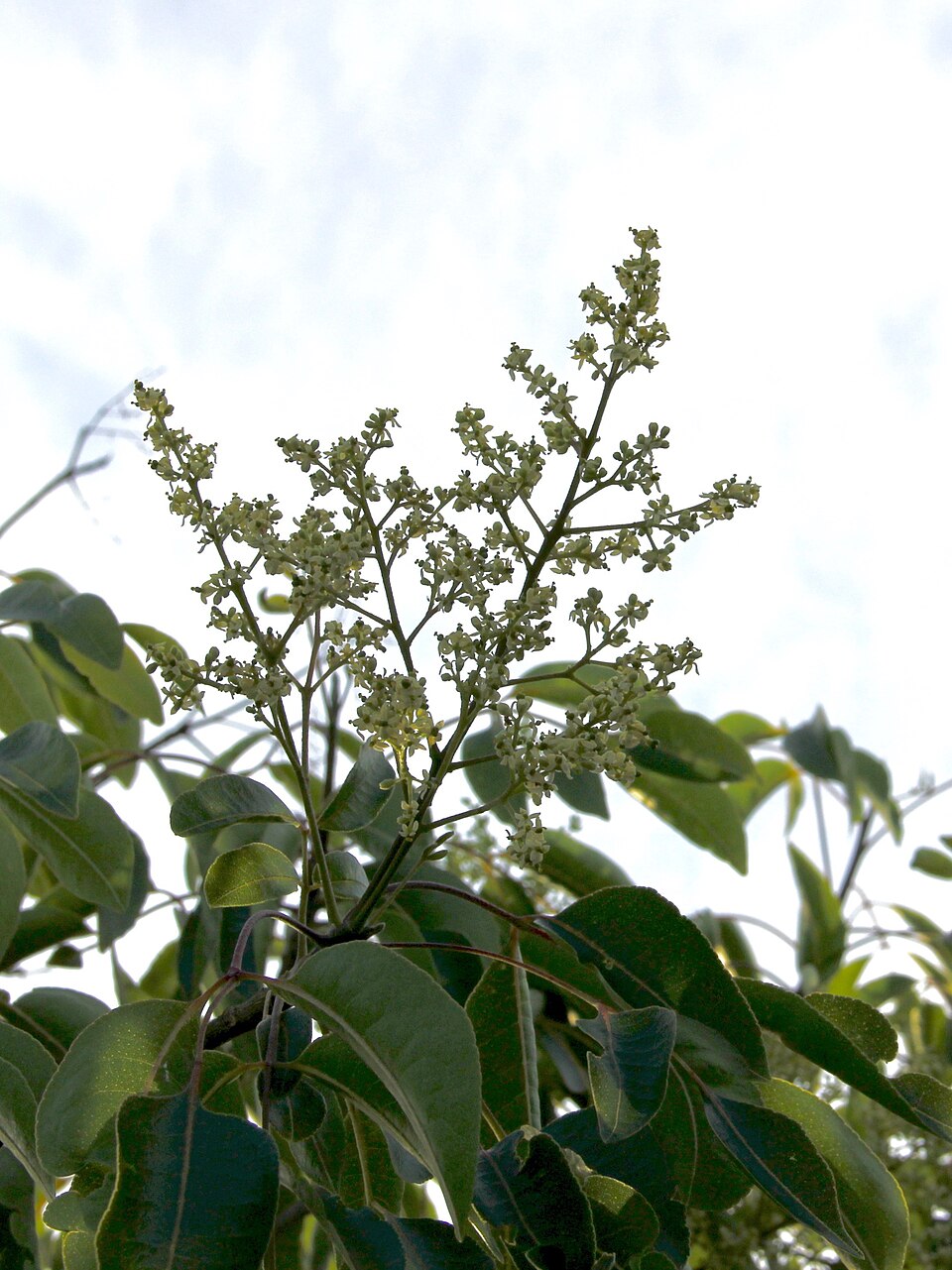

Zanthoxylum flavum is a medium-sized tree in the family Rutaceae. Common names include noyer, West Indian satinwood, yellow sanders, tembetaria, and yellow sandalwood. It is native to Anguilla, Antigua and Barbuda, the Bahamas, Bermuda, Cuba, the Dominican Republic, Guadeloupe, Haiti, Jamaica, Puerto Rico, and the Florida Keys, exclusive of Key West where it has been extirpated. It is threatened by habitat loss and harvesting for its dense, durable wood used in fine woodworking.
From Wikipedia, under CC BY-SA 4.0.
Is it poisonous?
We have no record of West Indian satinwood being toxic, poisonous or venomous. That is not proof that it is safe. Never eat, touch or handle a wild plant, mushroom or animal on the strength of an identification; ask someone qualified.
Easily confused with
- Canarium australianum
- Zanthoxylum kauaense
- Comocladia dentata
- Swietenia mahagoni
- Flindersia australis
- Metopium brownei
Classification
- Kingdom
- Plantae
- Phylum
- Tracheophyta
- Class
- Magnoliopsida
- Order
- Sapindales
- Family
- Rutaceae
- Genus
- Zanthoxylum
- Species
- Zanthoxylum flavum
Found one? Take a photo and B.inomen will suggest what it is, free.
Check your photo