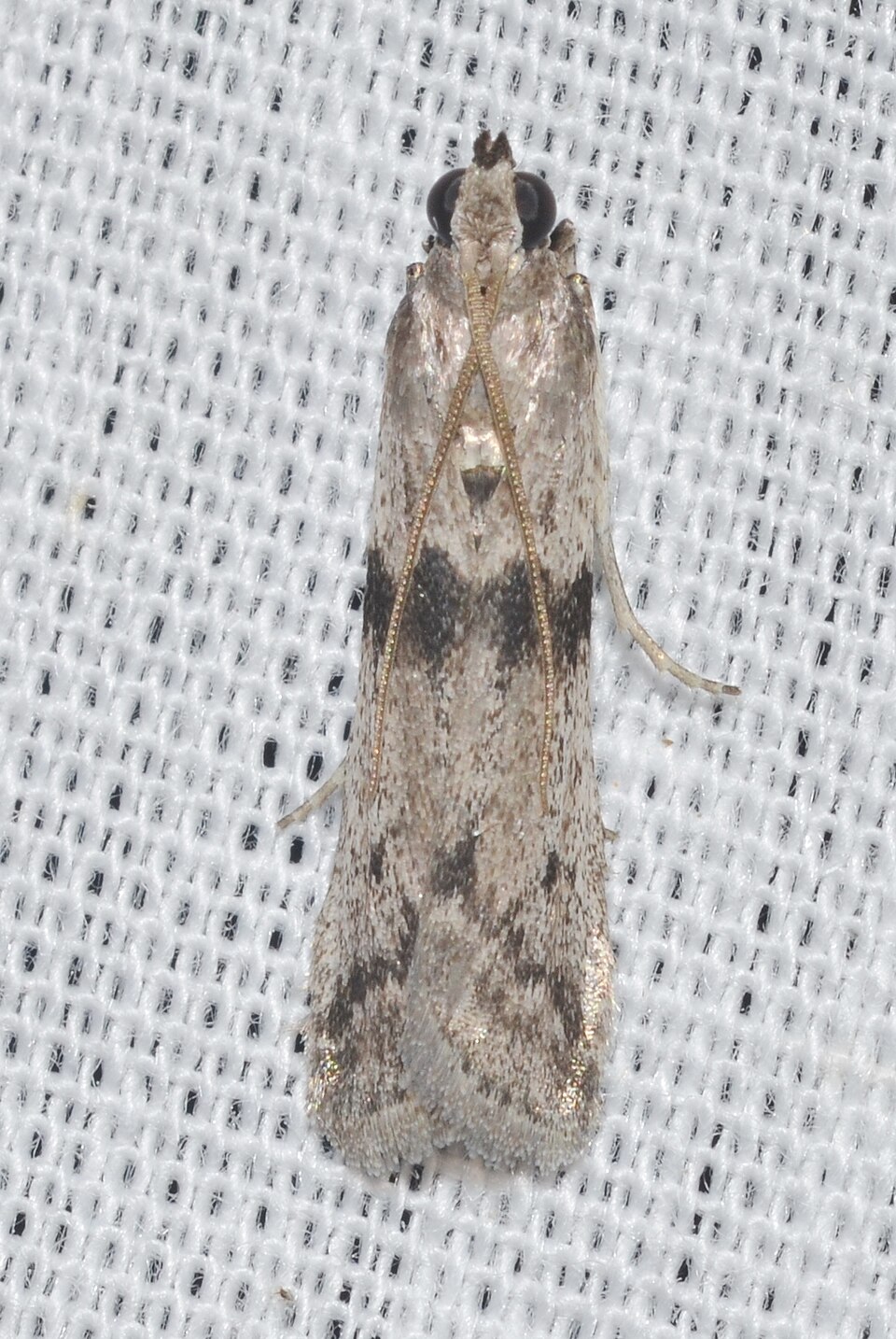

Homoeosoma deceptorium is a species of snout moth in the genus Homoeosoma. It was described by Carl Heinrich in 1956. It is found in much of eastern North America, including Florida, Georgia, Illinois, Indiana, Maryland, North Carolina, Ohio, Oklahoma, Ontario and West Virginia.
From Wikipedia, under CC BY-SA 4.0.
Is it venomous or poisonous?
We have no record of Black-banded Homoeosoma Moth being toxic, poisonous or venomous. That is not proof that it is safe. Never eat, touch or handle a wild plant, mushroom or animal on the strength of an identification; ask someone qualified.
Easily confused with
- Myelopsis alatella
- Patagoniodes farinaria
- Homoeosoma vagella
- Ephestia kuehniella
- Ephestia welseriella
- Phycitodes binaevella
Classification
- Kingdom
- Animalia
- Phylum
- Arthropoda
- Class
- Insecta
- Order
- Lepidoptera
- Family
- Pyralidae
- Genus
- Homoeosoma
- Species
- Homoeosoma deceptorium
Found one? Take a photo and B.inomen will suggest what it is, free.
Check your photo