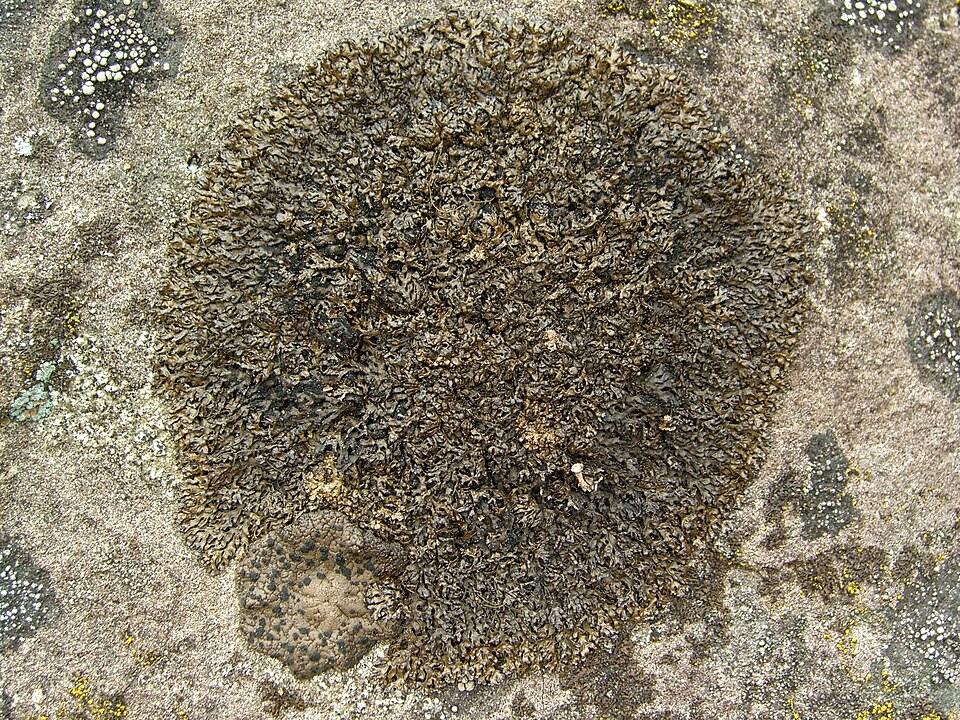

Melanelia stygia, the alpine camouflage lichen, is a species of lichen in the family Parmeliaceae. The dark-coloured lichen, first described by Carl Linnaeus in 1753, forms leafy growths on rocks in arctic and alpine regions throughout the Northern Hemisphere. The lichen has a dark brown to black, glossy surface with narrow, overlapping lobes and tiny pores called pseudocyphellae scattered across its surface. It is a slow-growing species well-adapted to harsh mountain environments, where it is commonly found on non-calcareous rocks at high elevations. While it tolerates extreme cold conditions, climate change may pose a threat to its survival.
From Wikipedia, under CC BY-SA 4.0.
Is it poisonous?
We have no record of Stygian Black-parmelia being toxic, poisonous or venomous. That is not proof that it is safe. Never eat, touch or handle a wild plant, mushroom or animal on the strength of an identification; ask someone qualified.
Easily confused with
- Montanelia disjuncta
- Melanelia hepatizon
- Montanelia sorediata
- Anaptychia runcinata
- Xanthoparmelia loxodes
- Phaeophyscia sciastra
Classification
- Kingdom
- Fungi
- Phylum
- Ascomycota
- Class
- Lecanoromycetes
- Order
- Lecanorales
- Family
- Parmeliaceae
- Genus
- Melanelia
- Species
- Melanelia stygia
Found one? Take a photo and B.inomen will suggest what it is, free.
Check your photo