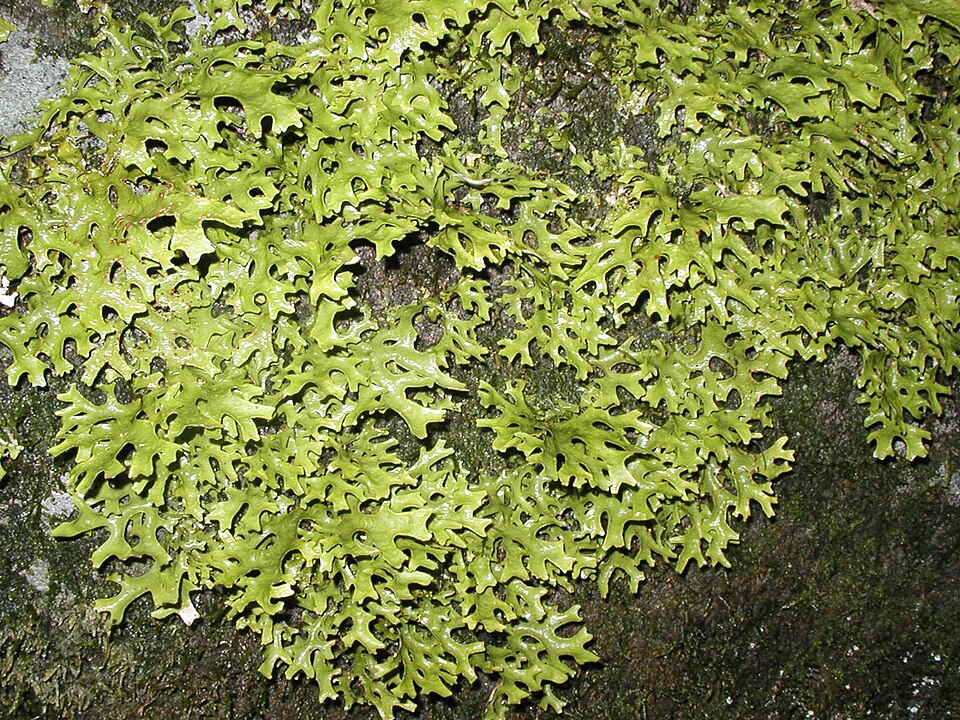

Sticta canariensis is a species of cyanolichen in the family Peltigeraceae. It is known for its ability to form photosymbiodemes – distinct morphological forms resulting from symbioses with either green algae or cyanobacteria. The species exhibits two main forms: a bright green chloromorph with dichotomously branched lobes and brown fruiting bodies, and a dark blue-grey cyanomorph with phyllidia and white mottling. It has a disjunct distribution across Atlantic Europe and Macaronesia, where it primarily grows as an epiphyte in laurisilva forests but can also be found on soil and rocks near water sources.
From Wikipedia, under CC BY-SA 4.0.
Is it poisonous?
We have no record of Sticta canariensis being toxic, poisonous or venomous. That is not proof that it is safe. Never eat, touch or handle a wild plant, mushroom or animal on the strength of an identification; ask someone qualified.
Easily confused with
- Pseudocyphellaria rufovirescens
- Pseudocyphellaria billardierei
- Pseudocyphellaria carpoloma
- Pseudocyphellaria faveolata
- Sticta latifrons
Classification
- Kingdom
- Fungi
- Phylum
- Ascomycota
- Class
- Lecanoromycetes
- Order
- Peltigerales
- Family
- Lobariaceae
- Genus
- Sticta
- Species
- Sticta canariensis
Found one? Take a photo and B.inomen will suggest what it is, free.
Check your photo