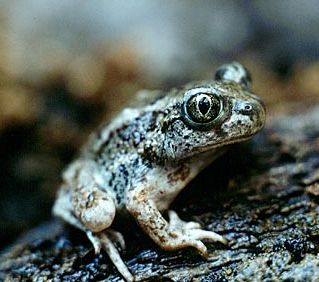

The Great Basin spadefoot (Spea intermontana) is an amphibian in the family Scaphiopodidae. It is 3.8 to 6.3 centimetres (1.5 to 2.5 in) long and is usually colored gray, olive or brown. Great Basin spadefoot toads have adapted to life in dry habitats. They use the hard, keratinized spade on each foot to dig a burrow, where they spend long periods during cold and dry weather. They are opportunistic hunters and will eat anything they can subdue. While their tadpoles have numerous predators, adults are able to produce skin secretions that deter enemies.
From Wikipedia, under CC BY-SA 4.0.
Is it venomous or poisonous?
We have no record of Great Basin Spadefoot being toxic, poisonous or venomous. That is not proof that it is safe. Never eat, touch or handle a wild plant, mushroom or animal on the strength of an identification; ask someone qualified.
Easily confused with
- Spea bombifrons
- Spea multiplicata
- Spea hammondii
- Pelobates vespertinus
- Pelobates balcanicus
- Scaphiopus hurterii
Classification
- Kingdom
- Animalia
- Phylum
- Chordata
- Class
- Amphibia
- Order
- Anura
- Family
- Scaphiopodidae
- Genus
- Spea
- Species
- Spea intermontana
Found one? Take a photo and B.inomen will suggest what it is, free.
Check your photo