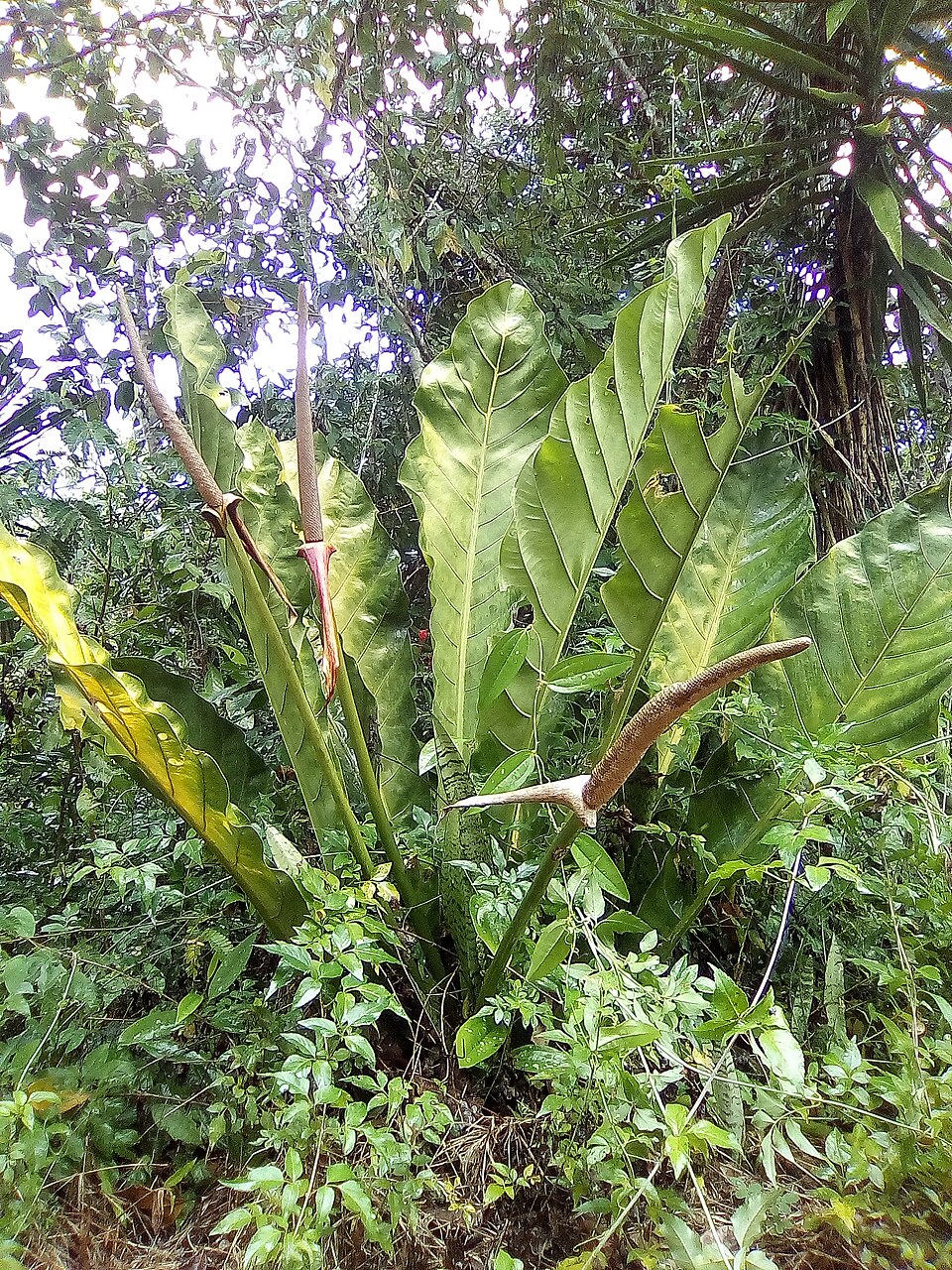

Anthurium schlechtendalii, also known as pheasant's tail or cola de faisán in Spanish, is a broad-leafed plant used for multiple medicinal purposes, including muscle and joint sprains, back pain, arthritis and rheumatism.
From Wikipedia, under CC BY-SA 4.0.
Is it poisonous?
Considered toxic. Public sources list it as such; we have not verified this individually. The note covers its whole genus. Anthurium plants are poisonous due to calcium oxalate crystals. The sap is irritating to the skin and eyes Never eat, touch or handle a wild plant, mushroom or animal on the strength of an identification; ask someone qualified.
Easily confused with
- Anthurium affine — considered toxic
- Anthurium solitarium — considered toxic
- Anthurium plowmanii — considered toxic
- Anthurium crenatum — considered toxic
- Anthurium salvinii — considered toxic
- Anthurium coriaceum — considered toxic
Classification
- Kingdom
- Plantae
- Phylum
- Tracheophyta
- Class
- Liliopsida
- Order
- Alismatales
- Family
- Araceae
- Genus
- Anthurium
- Species
- Anthurium schlechtendalii
Found one? Take a photo and B.inomen will suggest what it is, free.
Check your photo