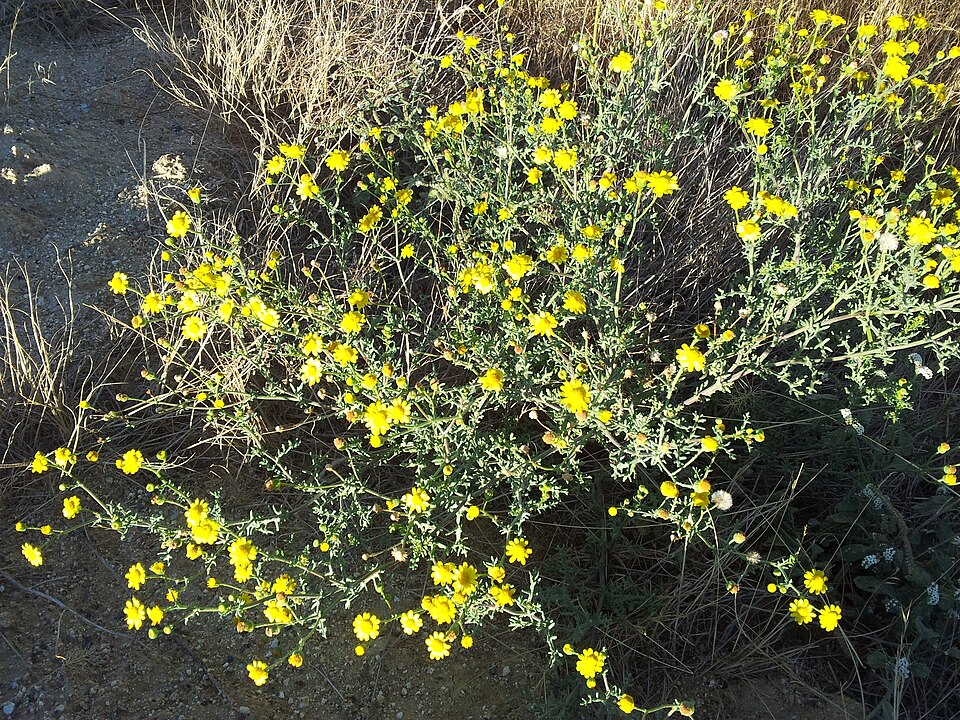

Senecio gallicus, an annual plant of the genus Senecio and family Asteraceae, is a species that colonizes isolated habitats with difficult environmental conditions. It is widespread across southern France and the Iberian Peninsula in deserts and xeric shrublands, on steppes and salty dry coastal plains. S. gallicus is playing a predominant role in shaping patterns of genetic structure by presenting models of historical associations among population rather than patterns of ongoing gene flow.
From Wikipedia, under CC BY-SA 4.0.
Is it poisonous?
Considered toxic. Public sources list it as such; we have not verified this individually. The note covers its whole genus. Pyrrolizidine alkaloids; liver damage with repeated ingestion Never eat, touch or handle a wild plant, mushroom or animal on the strength of an identification; ask someone qualified.
Easily confused with
- Senecio glaucus — considered toxic
- Senecio californicus — considered toxic
- Senecio leucanthemifolius — considered toxic
- Senecio vernalis — considered toxic
- Senecio littoreus — considered toxic
- Senecio consanguineus — considered toxic
Classification
- Kingdom
- Plantae
- Phylum
- Tracheophyta
- Class
- Magnoliopsida
- Order
- Asterales
- Family
- Asteraceae
- Genus
- Senecio
- Species
- Senecio gallicus
Found one? Take a photo and B.inomen will suggest what it is, free.
Check your photo