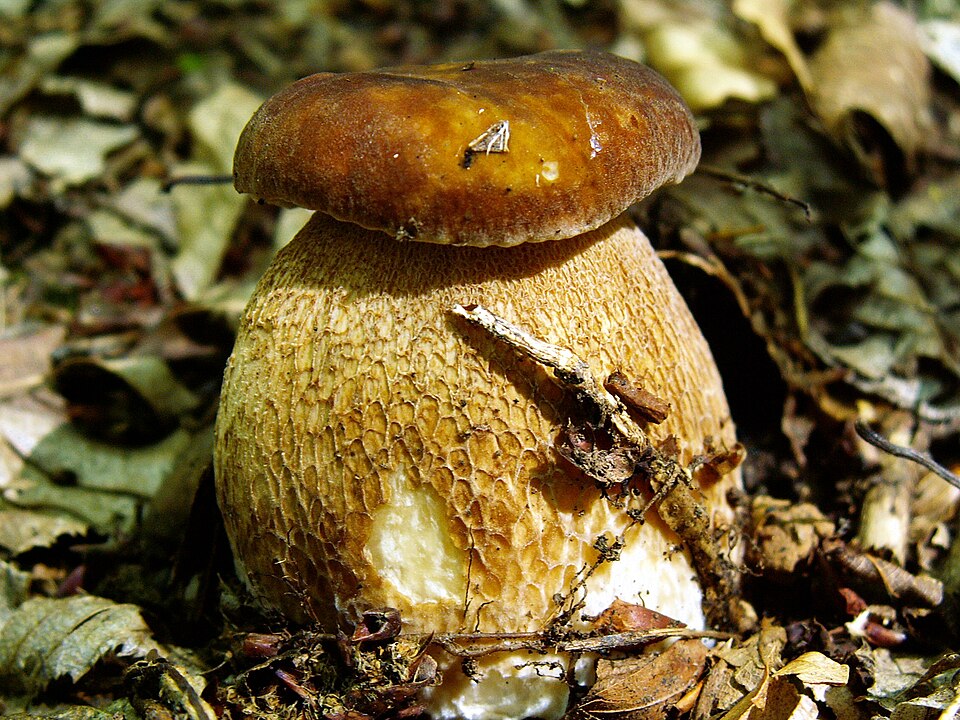

Boletus reticulatus (alternately known as Boletus aestivalis (Paulet) Fr.), and commonly referred to as the summer cep is a basidiomycete fungus of the genus Boletus. It occurs in deciduous forests of Europe, where it forms a symbiotic mycorrhizal relationship with species of oak (Quercus). The fungus produces fruiting bodies in the summer months which are edible and popularly collected. The summer cep was formally described by Jacob Christian Schäffer as Boletus reticulatus in 1774, which took precedence over B. aestivalis as described by Jean-Jacques Paulet in 1793.
From Wikipedia, under CC BY-SA 4.0.
Is it poisonous?
We have no record of Summer Bolete being toxic, poisonous or venomous. That is not proof that it is safe. Never eat, touch or handle a wild plant, mushroom or animal on the strength of an identification; ask someone qualified.
Easily confused with
- Boletus edulis
- Boletus aereus
- Boletus variipes
- Boletus atkinsonii
- Boletus chippewaensis
- Boletus quercophilus
Classification
- Kingdom
- Fungi
- Phylum
- Basidiomycota
- Class
- Agaricomycetes
- Order
- Boletales
- Family
- Boletaceae
- Genus
- Boletus
- Species
- Boletus reticulatus
Found one? Take a photo and B.inomen will suggest what it is, free.
Check your photo