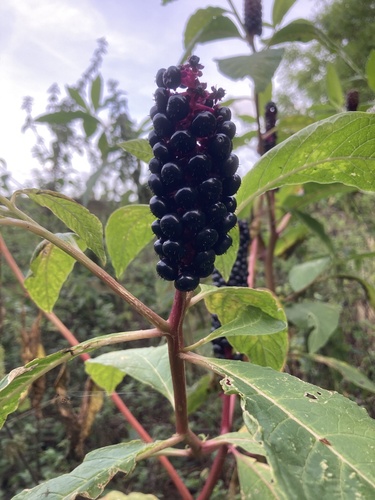
Is it poisonous?
Considered toxic. Public sources list it as such; we have not verified this individually. The note covers its whole genus. Leaves, berries, and roots contain phytolaccatoxin and phytolaccigenin. The toxicity of young leaves can be reduced with repeated boiling and draining. Ingestion of poisonous parts of the plant may cause severe stomach… Never eat, touch or handle a wild plant, mushroom or animal on the strength of an identification; ask someone qualified.
Easily confused with
- Phytolacca japonica — considered toxic
- Phytolacca acinosa — considered toxic
- Phytolacca thyrsiflora — considered toxic
- Phytolacca rugosa — considered toxic
- Phytolacca bogotensis — considered toxic
- Phytolacca heterotepala — considered toxic
Classification
- Kingdom
- Plantae
- Phylum
- Tracheophyta
- Class
- Magnoliopsida
- Order
- Caryophyllales
- Family
- Phytolaccaceae
- Genus
- Phytolacca
- Species
- Phytolacca polyandra
Found one? Take a photo and B.inomen will suggest what it is, free.
Check your photo