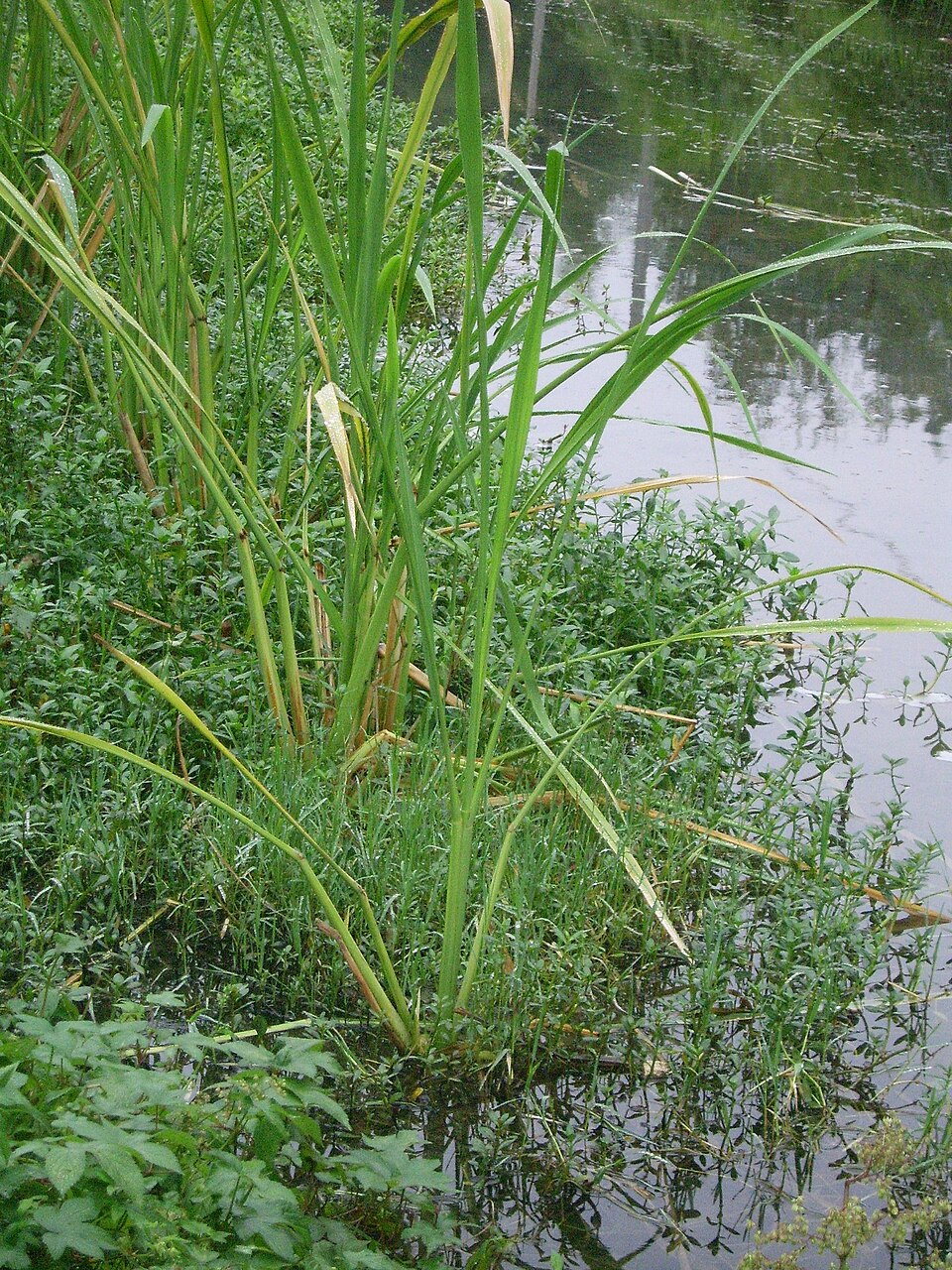

Zizania latifolia, known as Manchurian wild rice (Chinese: 菰; pinyin: gū), is the only member of the wild rice genus Zizania native to Asia. It is used as a food plant. Both the stem and grain are edible. Gathered in the wild, Manchurian wild rice was an important grain in ancient China. A wetland plant, Manchurian wild rice is now very rare in the wild, and its use as a grain has completely disappeared in Asia, though it continues to be cultivated for its stems. A measure of its former popularity is that the surname Jiǎng (simplified Chinese: 蒋; traditional Chinese: 蔣), one of the most common in China, derives from this crop.
From Wikipedia, under CC BY-SA 4.0.
Is it poisonous?
We have no record of Manchurian wild rice being toxic, poisonous or venomous. That is not proof that it is safe. Never eat, touch or handle a wild plant, mushroom or animal on the strength of an identification; ask someone qualified.
Easily confused with
- Zizaniopsis miliacea
- Glyceria maxima
- Zizania palustris
- Acorus calamus
- Zizania aquatica
- Echinochloa pyramidalis
Classification
- Kingdom
- Plantae
- Phylum
- Tracheophyta
- Class
- Liliopsida
- Order
- Poales
- Family
- Poaceae
- Genus
- Zizania
- Species
- Zizania latifolia
Found one? Take a photo and B.inomen will suggest what it is, free.
Check your photo