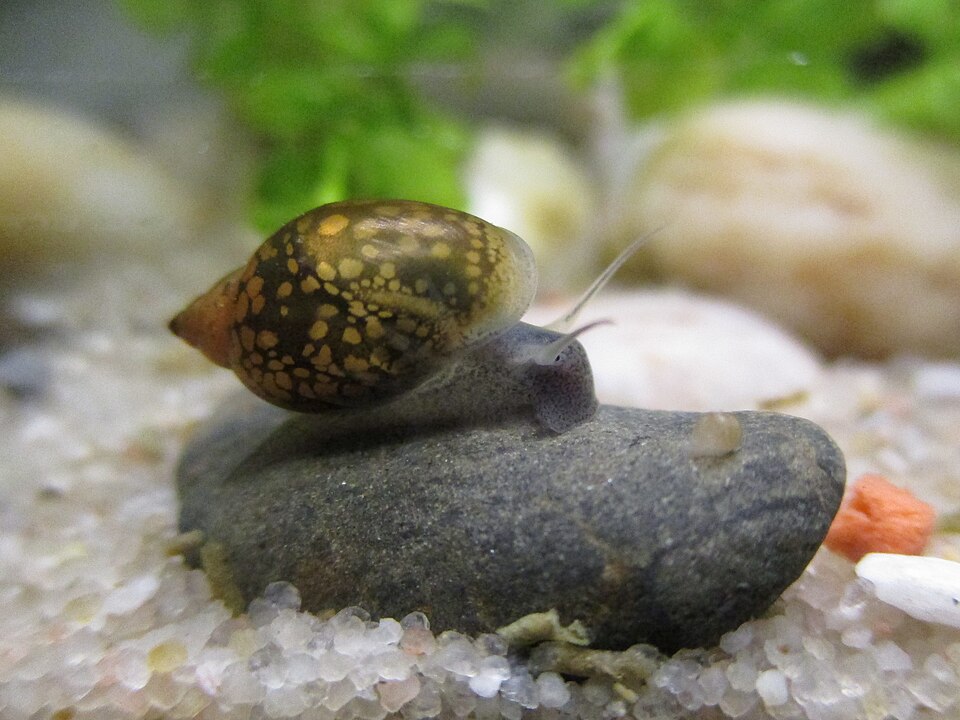

Physella acuta, also known as the European physa, tadpole snail, sewage snail, bladder snail, or acute bladder snail, is a species of small, air-breathing freshwater snail of the family Physidae. It originates from North America and was first described in 1805 by Jacques Philippe Raymond Draparnaud based on a specimen found in France. Like other physids, P. acuta presents a sinistral (left-coiling) shell as well as a unique set of muscles called the physid musculature that allows it to rapidly twist the shell as a defence mechanism.
From Wikipedia, under CC BY-SA 4.0.
Is it venomous or poisonous?
We have no record of Acute Bladder Snail being toxic, poisonous or venomous. That is not proof that it is safe. Never eat, touch or handle a wild plant, mushroom or animal on the strength of an identification; ask someone qualified.
Easily confused with
- Physella gyrina
- Glyptophysa novahollandica
- Physa fontinalis
- Pseudosuccinea columella
- Peregriana peregra
- Aplexa hypnorum
Classification
- Kingdom
- Animalia
- Phylum
- Mollusca
- Class
- Gastropoda
- Family
- Physidae
- Genus
- Physella
- Species
- Physella acuta
Found one? Take a photo and B.inomen will suggest what it is, free.
Check your photo