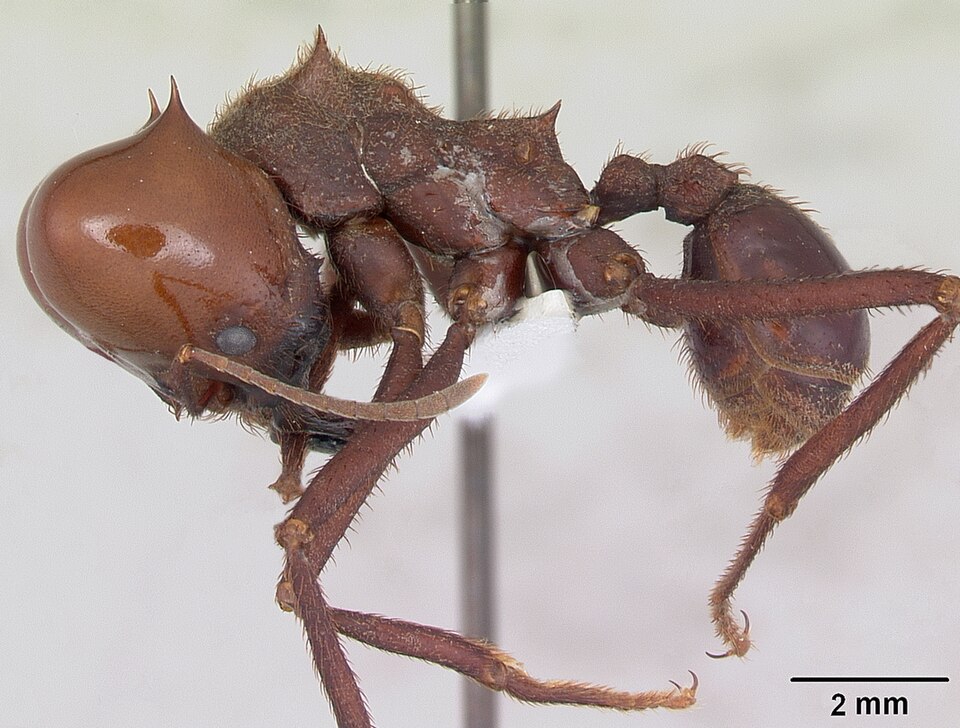

Atta laevigata (Smith, 1858) is one of about a dozen species of leafcutter ants in the genus Atta, found from Venezuela and south to Paraguay. This species is one of the largest leafcutter species, and can be recognized by the smooth and shining head of the largest workers in a colony. Atta laevigata is known in northern South America as hormiga culona (literally translated as "big-assed ant"), or as sikisapa in Peru, bachaco culón in Venezuela, akango in Paraguay. In Brazil they are known as "saúva-cabeça-de-vidro" (literally "glass-headed saúva"), with saúva being the common name for all Atta ants. Other Atta species are called zompopo de mayo in Central America and chicatana in Mexico.
From Wikipedia, under CC BY-SA 4.0.
Is it venomous or poisonous?
We have no record of Atta laevigata being toxic, poisonous or venomous. That is not proof that it is safe. Never eat, touch or handle a wild plant, mushroom or animal on the strength of an identification; ask someone qualified.
Easily confused with
Classification
- Kingdom
- Animalia
- Phylum
- Arthropoda
- Class
- Insecta
- Order
- Hymenoptera
- Family
- Formicidae
- Genus
- Atta
- Species
- Atta laevigata
Found one? Take a photo and B.inomen will suggest what it is, free.
Check your photo