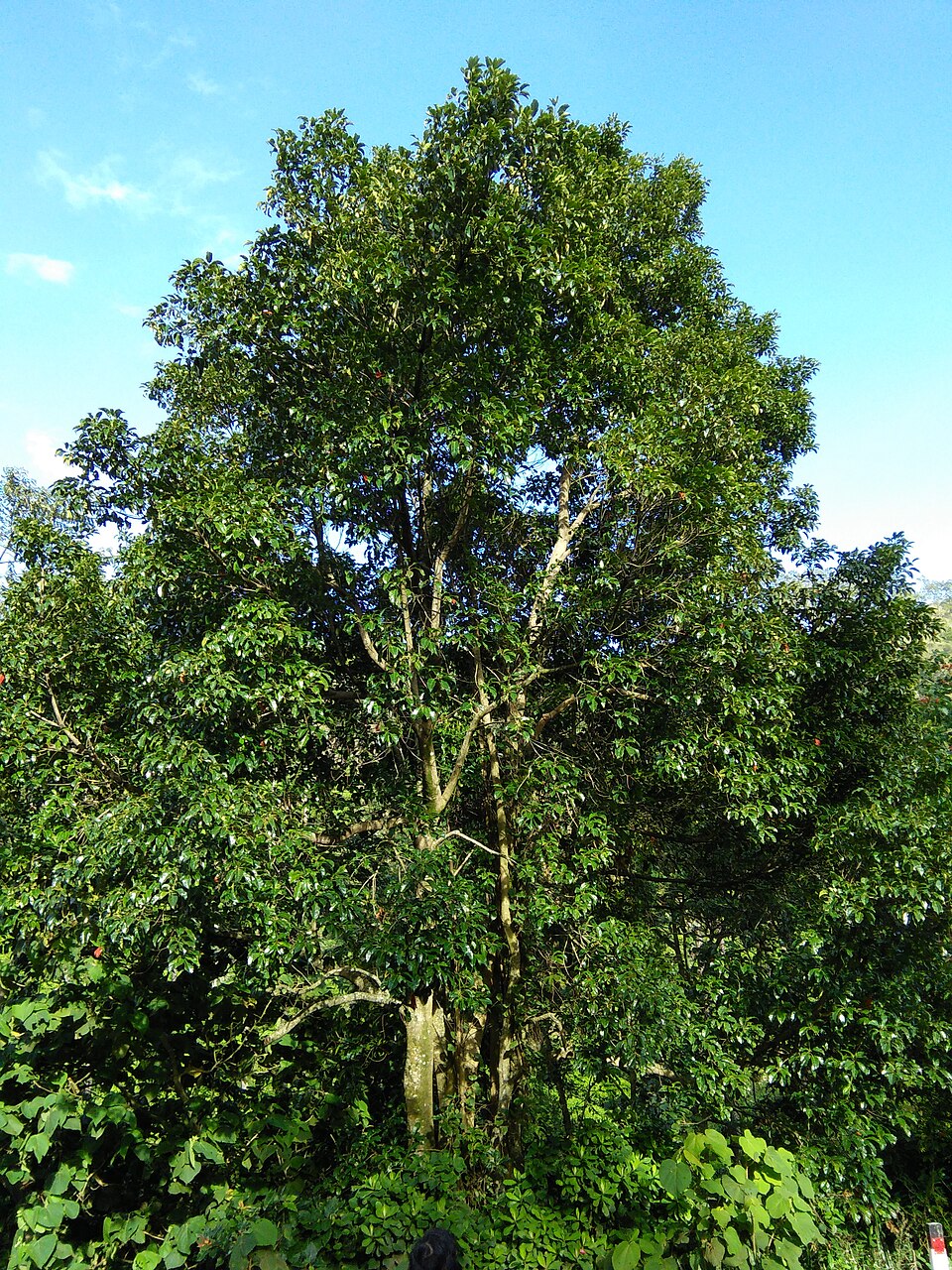

Elaeocarpus serratus, the Ceylon olive, is a tropical flowering plant in the family Elaeocarpaceae. It is a medium to large tree, with white flowers. It has a disjunctive distribution, with the species occurring in Sri Lanka and southern India, and in Assam, Bangladesh and other parts in the north of the Indian subcontinent. The fruit is commonly eaten, and people also use the plant for ornamental, religious and folk-medicinal purposes. There are historical records of traditional-medicine use of the plant. Paradoxurus jerdoni (Brown palm civet) consumes parts of the tree.
From Wikipedia, under CC BY-SA 4.0.
Is it poisonous?
We have no record of Ceylon olive being toxic, poisonous or venomous. That is not proof that it is safe. Never eat, touch or handle a wild plant, mushroom or animal on the strength of an identification; ask someone qualified.
Easily confused with
- Elaeocarpus variabilis
- Elaeocarpus mastersii
- Persea caerulea
- Persea americana
- Elaeocarpus japonicus
- Camphora micrantha
Classification
- Kingdom
- Plantae
- Phylum
- Tracheophyta
- Class
- Magnoliopsida
- Order
- Oxalidales
- Family
- Elaeocarpaceae
- Genus
- Elaeocarpus
- Species
- Elaeocarpus serratus
Found one? Take a photo and B.inomen will suggest what it is, free.
Check your photo