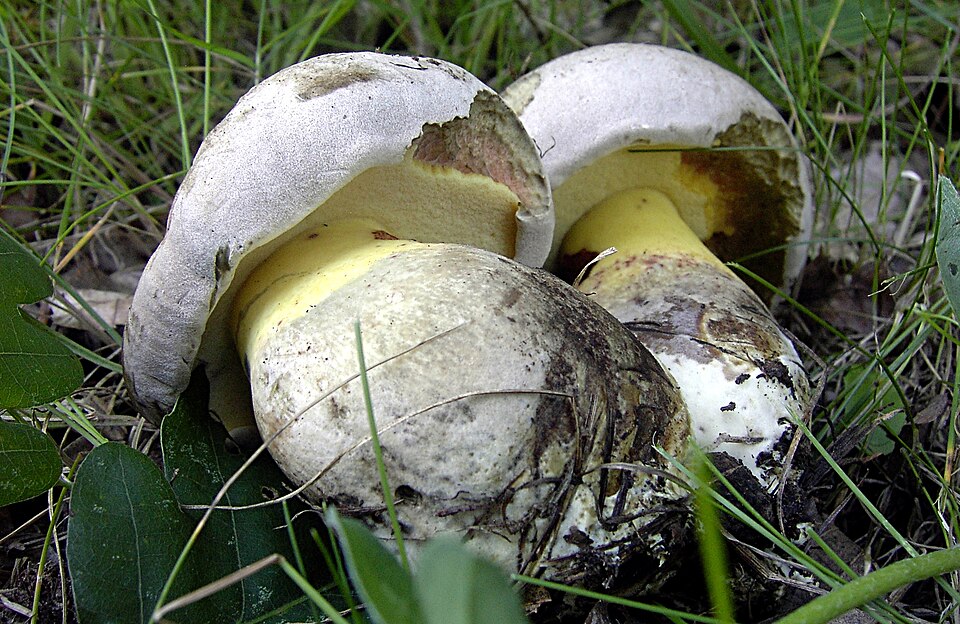

Caloboletus radicans, also known as the rooting bolete or whitish bolete, is a large ectomycorrhizal fungus found in Europe under broad-leaved trees, fruiting during the summer and autumn months. It has a pale buff or greyish-white cap, yellow pores and a stout stipe, and stains intensely blue when handled or cut. Bitter and inedible, it can cause severe vomiting and diarrhoea if eaten. Until 2014 it was placed in genus Boletus, but has since been transferred to the new genus Caloboletus based on molecular phylogenetic data.
From Wikipedia, under CC BY-SA 4.0.
Is it poisonous?
Considered toxic. Public sources list it as such; we have not verified this individually. Never eat, touch or handle a wild plant, mushroom or animal on the strength of an identification; ask someone qualified.
Easily confused with
- Butyriboletus fechtneri
- Hemileccinum impolitum
- Caloboletus marshii
- Butyriboletus fuscoroseus
- Butyriboletus appendiculatus
Classification
- Kingdom
- Fungi
- Phylum
- Basidiomycota
- Class
- Agaricomycetes
- Order
- Boletales
- Family
- Boletaceae
- Genus
- Caloboletus
- Species
- Caloboletus radicans
Found one? Take a photo and B.inomen will suggest what it is, free.
Check your photo