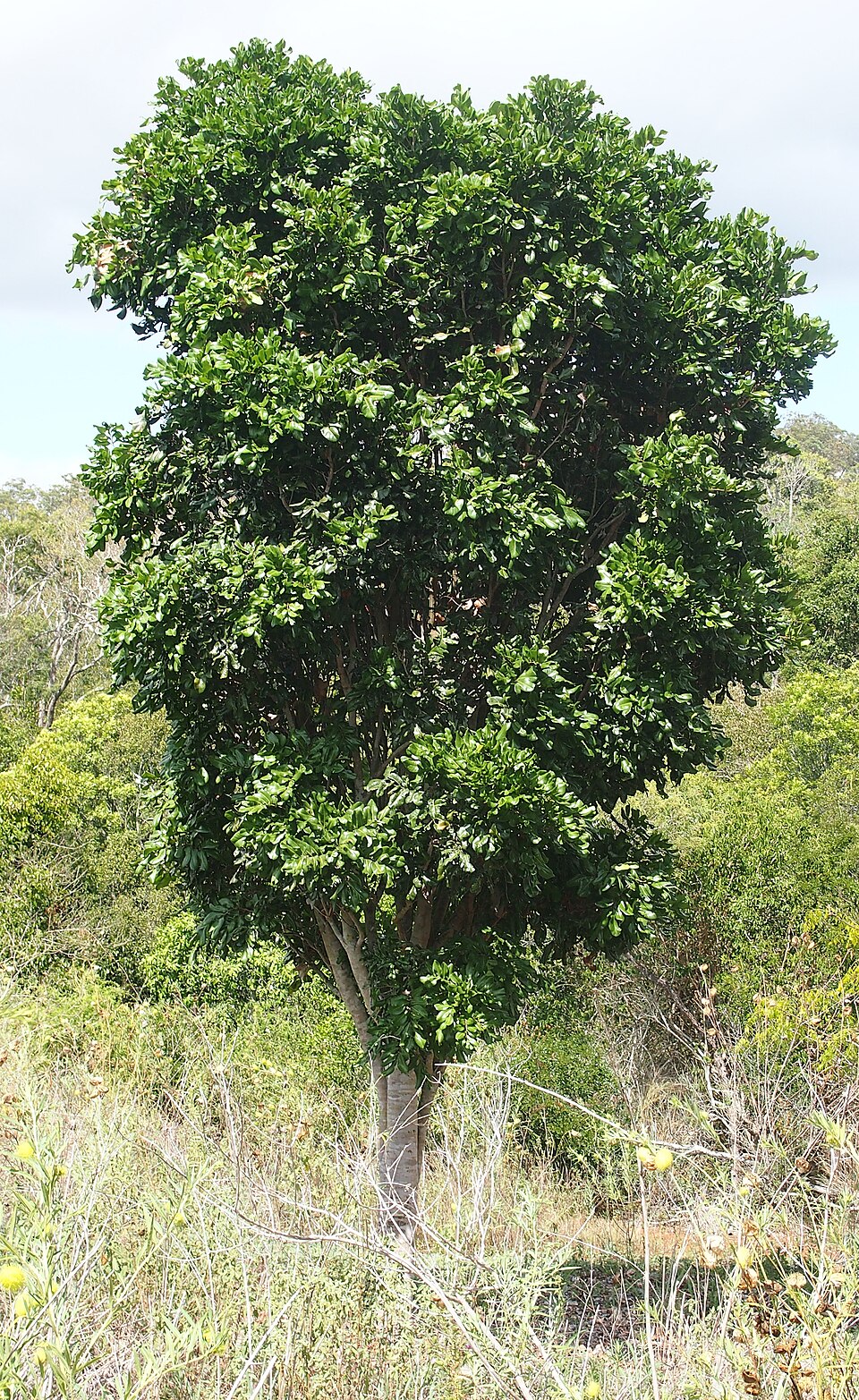

Cupaniopsis anacardioides, commonly known as tuckeroo, cashew-leaf cupania, carrotwood, beach tamarind or green-leaved tamarind, is a species of flowering plant in the family, Sapindaceae, and is native to eastern and northern Australia. It is a tree with paripinnate leaves with 4 to 8 egg-shaped leaflets with the narrower end towards the base, or elliptic leaves, and separate male and female flowers arranged in panicles, the fruit a more or less spherical golden yellow capsule.
From Wikipedia, under CC BY-SA 4.0.
Is it poisonous?
We have no record of Small-leaved tuckeroo being toxic, poisonous or venomous. That is not proof that it is safe. Never eat, touch or handle a wild plant, mushroom or animal on the strength of an identification; ask someone qualified.
Easily confused with
- Cupaniopsis anacardioides
- Flindersia bennettii
- Lepidocupania arcuata
- Dinosperma erythrococcum
- Guioa acutifolia
Classification
- Kingdom
- Plantae
- Phylum
- Tracheophyta
- Class
- Magnoliopsida
- Order
- Sapindales
- Family
- Sapindaceae
- Genus
- Cupaniopsis
- Species
- Cupaniopsis parvifolia
Found one? Take a photo and B.inomen will suggest what it is, free.
Check your photo