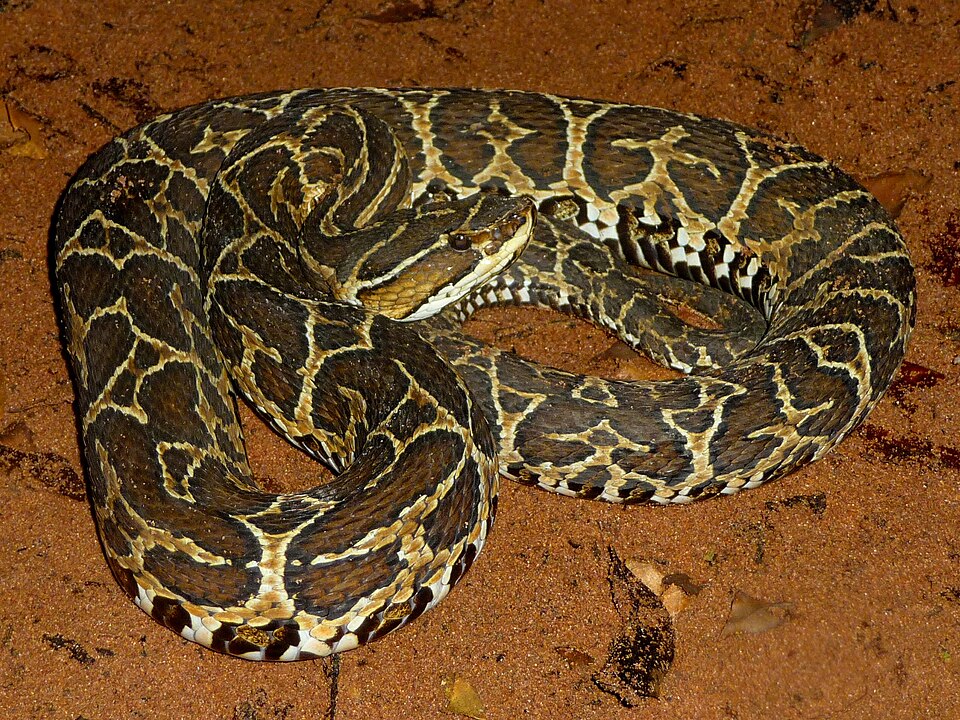

Bothrops alternatus, known by the common names crossed pit viper, yarará grande, and urutu, among others, is a highly venomous pit viper species found in South America (Brazil, Paraguay, Uruguay and Argentina). Within its range, it is an important cause of a snakebite. The specific name, alternatus, which is Latin for "alternating", is apparently a reference to the staggered markings along its body. No subspecies are currently recognized.
From Wikipedia, under CC BY-SA 4.0.
Is it venomous or poisonous?
Considered venomous. Public sources list it as such; we have not verified this individually. The note covers its whole genus. Lanceheads (Bothrops spp.), including the fer-de-lance (B. lanceolatus) and the terciopelo (B. asper) Never eat, touch or handle a wild plant, mushroom or animal on the strength of an identification; ask someone qualified.
Easily confused with
- Bothrops neuwiedi — considered venomous
- Bothrops diporus — considered venomous
- Bothrops pubescens — considered venomous
- Bitis arietans — venomous
- Daboia siamensis — venomous
Classification
- Kingdom
- Animalia
- Phylum
- Chordata
- Class
- Reptilia
- Order
- Squamata
- Family
- Viperidae
- Genus
- Bothrops
- Species
- Bothrops alternatus
Found one? Take a photo and B.inomen will suggest what it is, free.
Check your photo