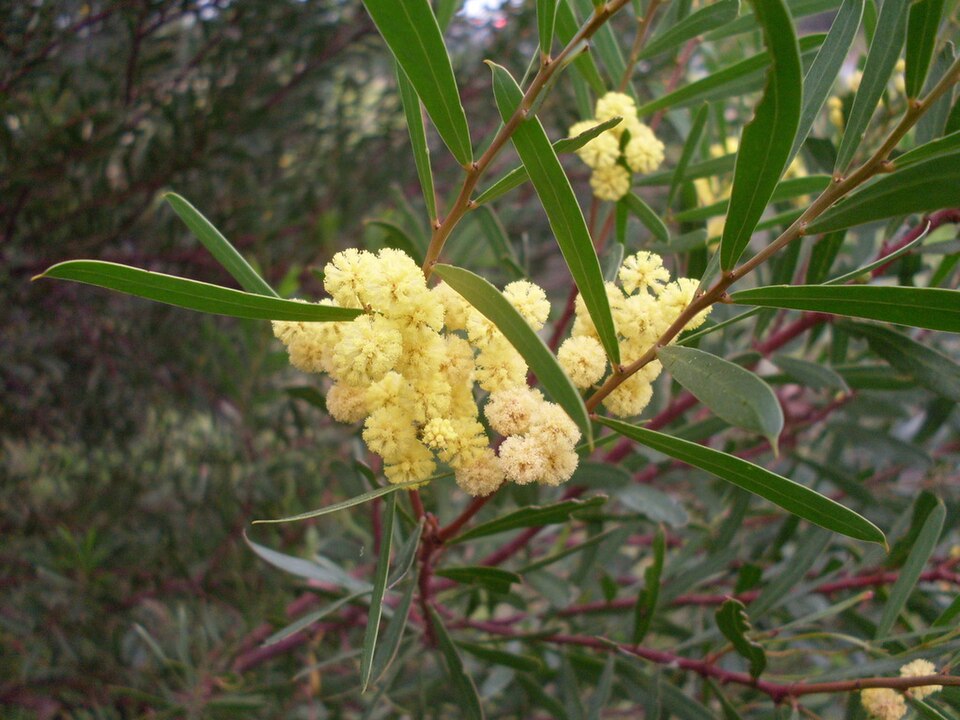

Acacia uncifolia, commonly known as coast wirilda, is a wattle endemic to south-eastern Australia. It grows as a tall shrub or small tree, up to 2–6 m high and 2–4 m wide, in coastal areas of South Australia and Victoria, as well as on Tasmania’s Flinders Island and possibly other islands in Bass Strait. Its preferred habitats are coastal heathland, shrubland and dry open woodland on calcarenite soils. The phyllodes have hooked tips and the flowers are pale yellow. It is a host of the wireleaf mistletoe. It is listed as Rare under Tasmania's Threatened Species Protection Act 1995.
From Wikipedia, under CC BY-SA 4.0.
Is it poisonous?
We have no record of Coast wirilda being toxic, poisonous or venomous. That is not proof that it is safe. Never eat, touch or handle a wild plant, mushroom or animal on the strength of an identification; ask someone qualified.
Easily confused with
- Acacia provincialis
- Acacia rostellifera
- Acacia retinodes
- Acacia neriifolia
- Acacia simsii
- Acacia cupularis
Classification
- Kingdom
- Plantae
- Phylum
- Tracheophyta
- Class
- Magnoliopsida
- Order
- Fabales
- Family
- Fabaceae
- Genus
- Acacia
- Species
- Acacia uncifolia
Found one? Take a photo and B.inomen will suggest what it is, free.
Check your photo