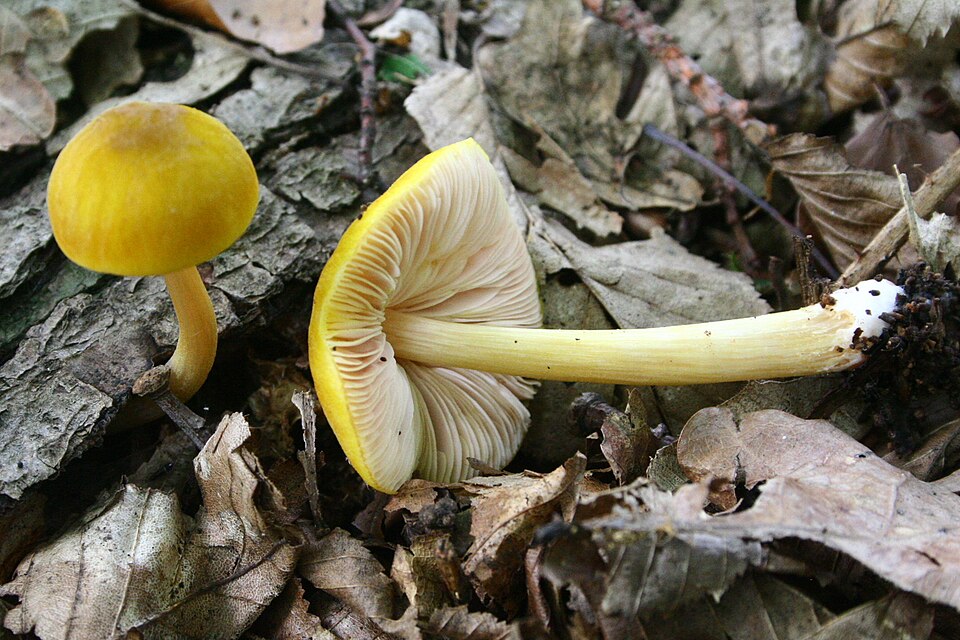

Pluteus leoninus, commonly known as the lion pluteus or lion shield, can occasionally be found growing on dead wood in Europe and North Africa. The underside of the cap is typical of the genus Pluteus — the gills are pale, soon becoming pink when the spores ripen. But the upper surface is a bright tawny or olivaceous yellow. The species name leoninus (meaning leonine) refers to this cap colour.
From Wikipedia, under CC BY-SA 4.0.
Is it poisonous?
We have no record of Lion shield being toxic, poisonous or venomous. That is not proof that it is safe. Never eat, touch or handle a wild plant, mushroom or animal on the strength of an identification; ask someone qualified.
Easily confused with
- Pluteus flavofuligineus
- Pluteus chrysophaeus
- Pluteus variabilicolor
- Pluteus chrysophlebius
- Pluteus fenzlii
- Pluteus mammillatus
Classification
- Kingdom
- Fungi
- Phylum
- Basidiomycota
- Class
- Agaricomycetes
- Order
- Agaricales
- Family
- Pluteaceae
- Genus
- Pluteus
- Species
- Pluteus leoninus
Found one? Take a photo and B.inomen will suggest what it is, free.
Check your photo