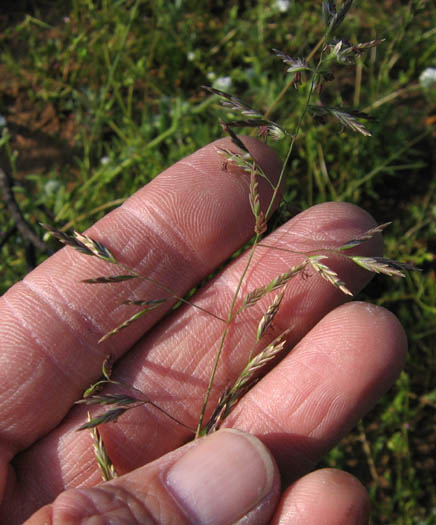

Poa secunda (variously known by the common names of Sandberg bluegrass, alkali bluegrass, big bluegrass, Canby's bluegrass, Nevada bluegrass, one-sided bluegrass, Pacific bluegrass, pine bluegrass, slender bluegrass, wild bluegrass, and curly bluegrass) is a widespread species of perennial bunchgrass native to North and South America. It is highly resistant to drought conditions, and provides excellent fodder; and has also been used in controlling soil erosion, and as revegetator, often after forest fires. Cultivars include 'Canbar', 'Service', 'Sherman', and 'Supernova'. Historically, indigenous Americans, such as the Gosiute of Utah, have used P. secunda for food.
From Wikipedia, under CC BY-SA 4.0.
Is it poisonous?
We have no record of Pine bluegrass being toxic, poisonous or venomous. That is not proof that it is safe. Never eat, touch or handle a wild plant, mushroom or animal on the strength of an identification; ask someone qualified.
Easily confused with
Classification
- Kingdom
- Plantae
- Phylum
- Tracheophyta
- Class
- Liliopsida
- Order
- Poales
- Family
- Poaceae
- Genus
- Poa
- Species
- Poa secunda
Found one? Take a photo and B.inomen will suggest what it is, free.
Check your photo