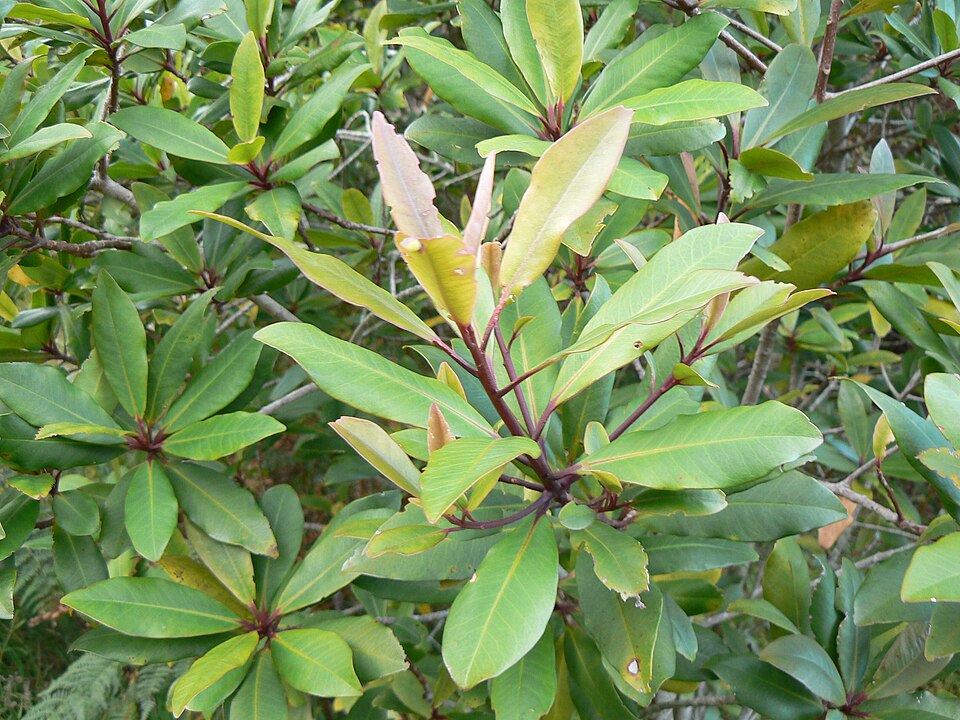

Myrsine melanophloeos, commonly known as Cape beech, Kaapboekenhout (Afrikaans), isiCalabi (Zulu) or isiQwane sehlati (Xhosa) is a dense evergreen tree that is native to the afromontane forests of Africa, ranging from Nigeria and Sudan to South Africa. Outside forests they are also commonly encountered along stream banks and in gullies.
From Wikipedia, under CC BY-SA 4.0.
Is it poisonous?
We have no record of Cape beech being toxic, poisonous or venomous. That is not proof that it is safe. Never eat, touch or handle a wild plant, mushroom or animal on the strength of an identification; ask someone qualified.
Easily confused with
- Myrsine lorentziana
- Myrsine laetevirens
- Pittosporum umbellatum
- Drimys winteri
- Tristaniopsis laurina
- Myrsine howittiana
Classification
- Kingdom
- Plantae
- Phylum
- Tracheophyta
- Class
- Magnoliopsida
- Order
- Ericales
- Family
- Primulaceae
- Genus
- Rapanea
- Species
- Rapanea melanophloeos
Found one? Take a photo and B.inomen will suggest what it is, free.
Check your photo