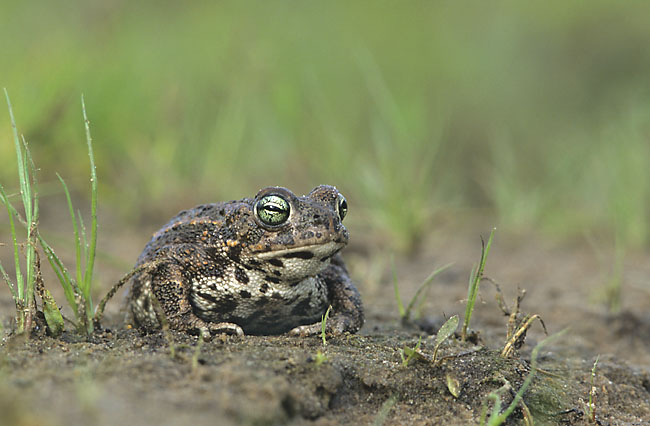

The natterjack toad (Epidalea calamita) is a toad native to sandy and heathland areas of Europe. Adults are 60–70 mm (2.4–2.8 in) in length, and are distinguished from common toads by a yellow line down the middle of the back and parallel paratoid glands. They have relatively short legs, which gives them a distinctive gait, contrasting with the hopping movement of many other toad species.
From Wikipedia, under CC BY-SA 4.0.
Is it venomous or poisonous?
Considered poisonous. Public sources list it as such; we have not verified this individually. The note covers its whole family. True toads; bufotoxin from parotoid glands, dangerous to pets Never eat, touch or handle a wild plant, mushroom or animal on the strength of an identification; ask someone qualified.
Easily confused with
- Strauchbufo raddei — considered poisonous
- Vandijkophrynus nubicola — considered poisonous
- Vandijkophrynus angusticeps — considered poisonous
- Bufotes pewzowi — considered poisonous
- Anaxyrus boreas — considered poisonous
- Anaxyrus canorus — considered poisonous
Classification
- Kingdom
- Animalia
- Phylum
- Chordata
- Class
- Amphibia
- Order
- Anura
- Family
- Bufonidae
- Genus
- Epidalea
- Species
- Epidalea calamita
Found one? Take a photo and B.inomen will suggest what it is, free.
Check your photo