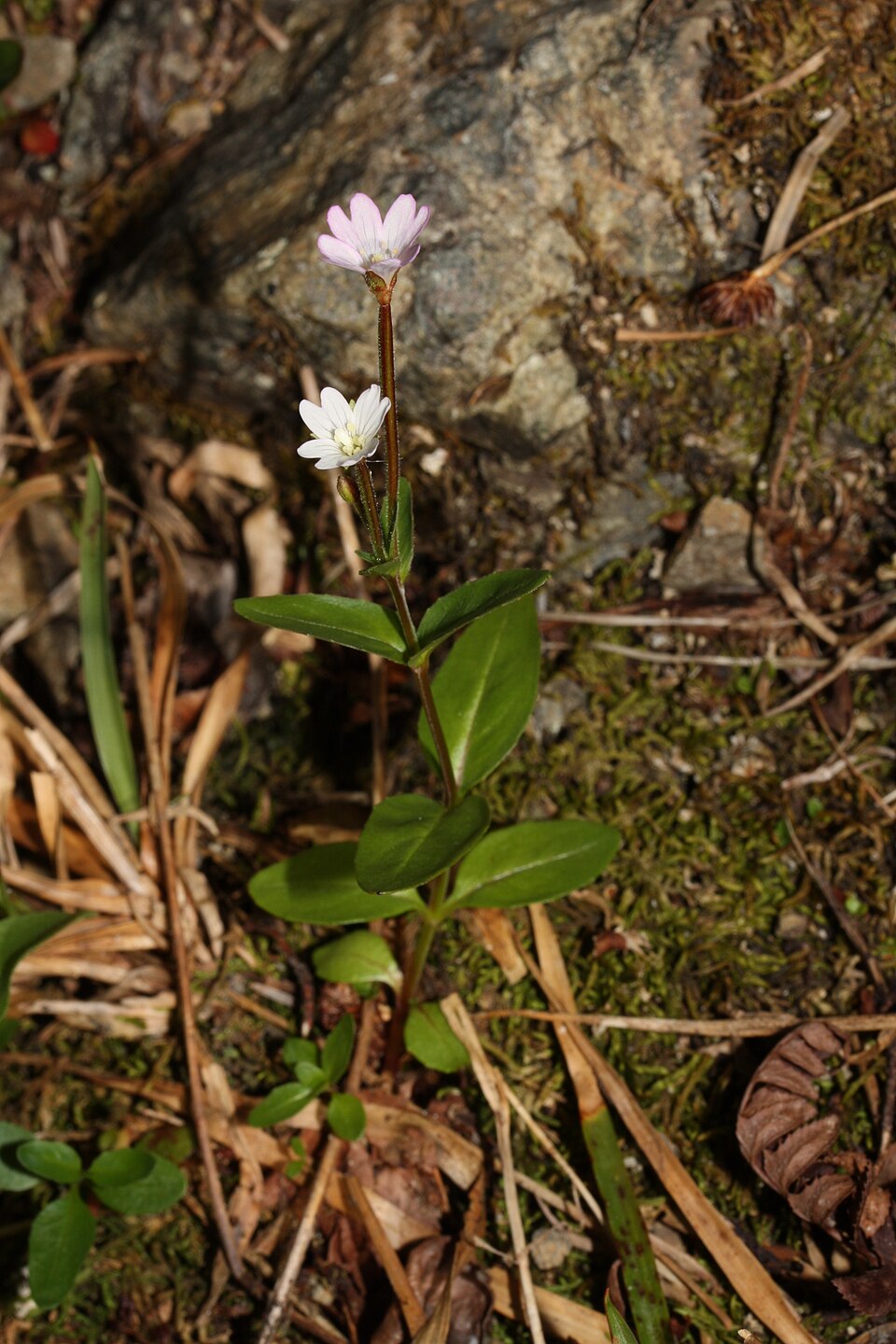

Epilobium clavatum is a species of flowering plant in the evening primrose family known by the common names talus willowherb and clavatefruit willowherb. It is native to western North America from Alaska to northern California to Colorado, where it grows in rocky high mountain habitat such as talus. It is a clumping perennial herb forming bristly mounds up to about 20 centimeters high and spreading outward via tough stolons. The oval-shaped leaves are 1 to 3 centimeters long. The inflorescence is an erect raceme of flowers, each with four small pink petals. The fruit is a capsule up to 4 centimeters long.
From Wikipedia, under CC BY-SA 4.0.
Is it poisonous?
We have no record of Clavate-fruit Willowherb being toxic, poisonous or venomous. That is not proof that it is safe. Never eat, touch or handle a wild plant, mushroom or animal on the strength of an identification; ask someone qualified.
Easily confused with
- Epilobium anagallidifolium
- Epilobium hornemannii
- Epilobium alsinifolium
- Epilobium nutans
- Epilobium glaberrimum
- Epilobium minutum
Classification
- Kingdom
- Plantae
- Phylum
- Tracheophyta
- Class
- Magnoliopsida
- Order
- Myrtales
- Family
- Onagraceae
- Genus
- Epilobium
- Species
- Epilobium clavatum
Found one? Take a photo and B.inomen will suggest what it is, free.
Check your photo