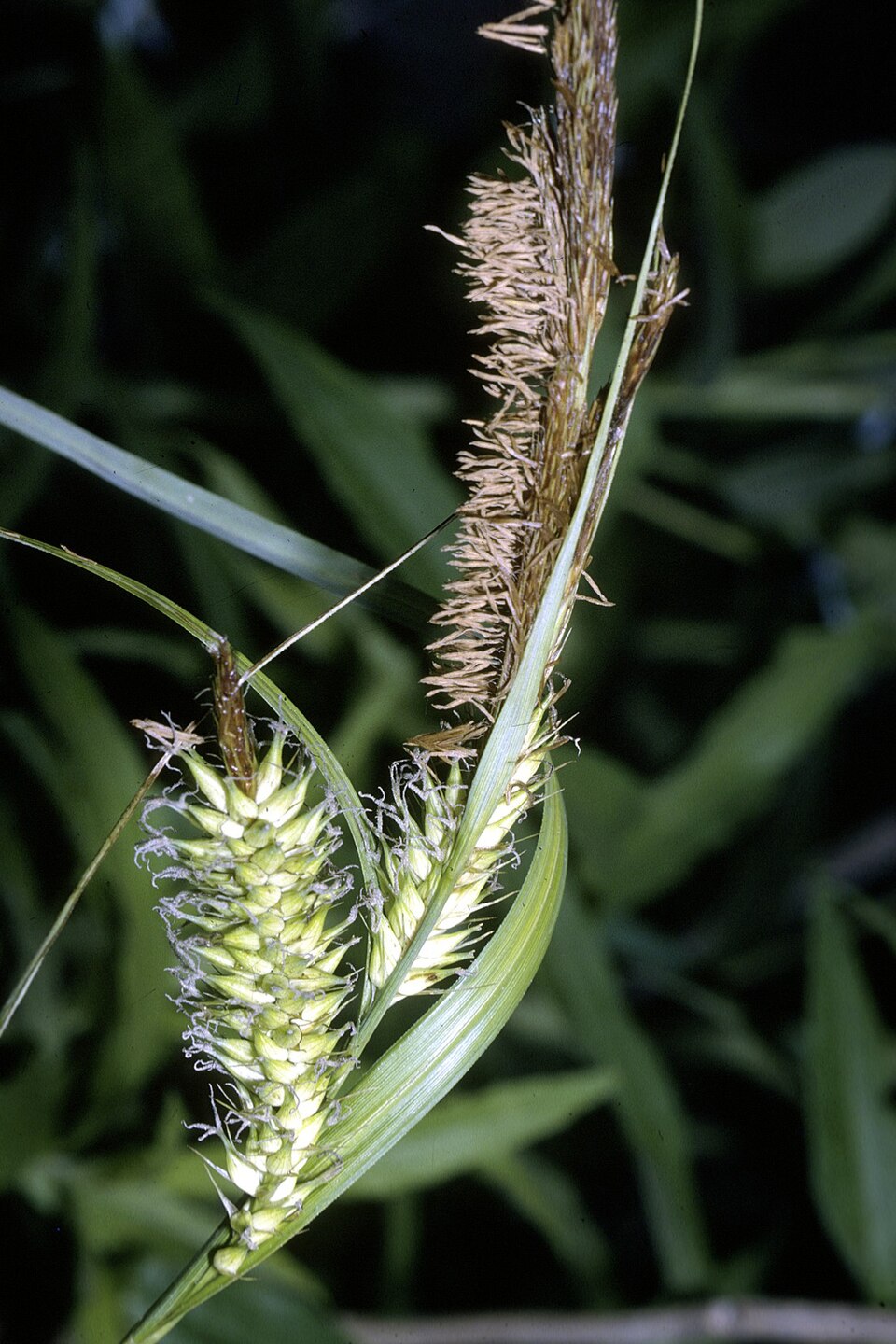

Carex lacustris, known as lake sedge (lucastris is from the Latin lacus, or lake), is a tufted grass-like perennial of the sedge family (Cyperaceae), native to southern Canada and the northern United States. C. lacustris us an herbaceous surface-piercing plant that grows in water up to 50 cm (1.6 ft) deep, and grows 50–150 cm (1.6–4.9 ft) tall. It grows well in marshes and swampy woods of the boreal forest, along river and lake shores, in ditches, marshes, swamps, and other wetland habitat. It grows on muck, sedge peat, wet sand or silt, in filtered or full sunlight.
From Wikipedia, under CC BY-SA 4.0.
Is it poisonous?
We have no record of Lake sedge being toxic, poisonous or venomous. That is not proof that it is safe. Never eat, touch or handle a wild plant, mushroom or animal on the strength of an identification; ask someone qualified.
Easily confused with
Classification
- Kingdom
- Plantae
- Phylum
- Tracheophyta
- Class
- Liliopsida
- Order
- Poales
- Family
- Cyperaceae
- Genus
- Carex
- Species
- Carex lacustris
Found one? Take a photo and B.inomen will suggest what it is, free.
Check your photo