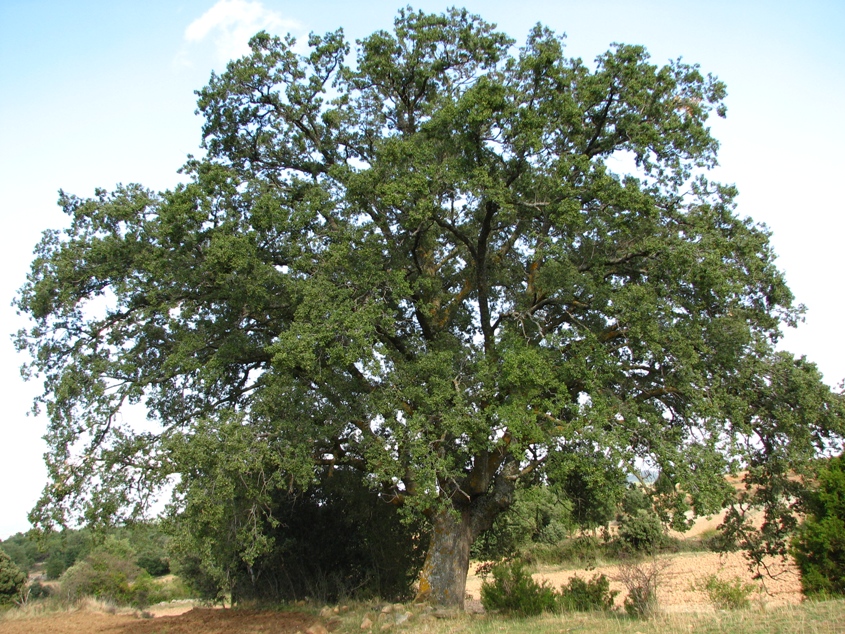

Quercus faginea, the Portuguese oak, is a species of oak native to the western Mediterranean region in the Iberian Peninsula. Similar trees in the Atlas Mountains of northwest Africa are usually included in this species, or sometimes treated as a distinct species, Quercus tlemcenensis. It occurs in mountains from sea level to 1,900 metres (6,200 feet) above sea level, and flourishes in a variety of soils and climates. Out of all the oak forests in the Iberian Peninsula, the southern populations of Portuguese oak were found to have the highest diversity and endemism of spider species.
From Wikipedia, under CC BY-SA 4.0.
Is it poisonous?
We have no record of Portuguese oak being toxic, poisonous or venomous. That is not proof that it is safe. Never eat, touch or handle a wild plant, mushroom or animal on the strength of an identification; ask someone qualified.
Easily confused with
- Quercus infectoria
- Quercus canariensis
- Quercus trojana
- Quercus estremadurensis
- Quercus ithaburensis
- Quercus lusitanica
Classification
- Kingdom
- Plantae
- Phylum
- Tracheophyta
- Class
- Magnoliopsida
- Order
- Fagales
- Family
- Fagaceae
- Genus
- Quercus
- Species
- Quercus faginea
Found one? Take a photo and B.inomen will suggest what it is, free.
Check your photo