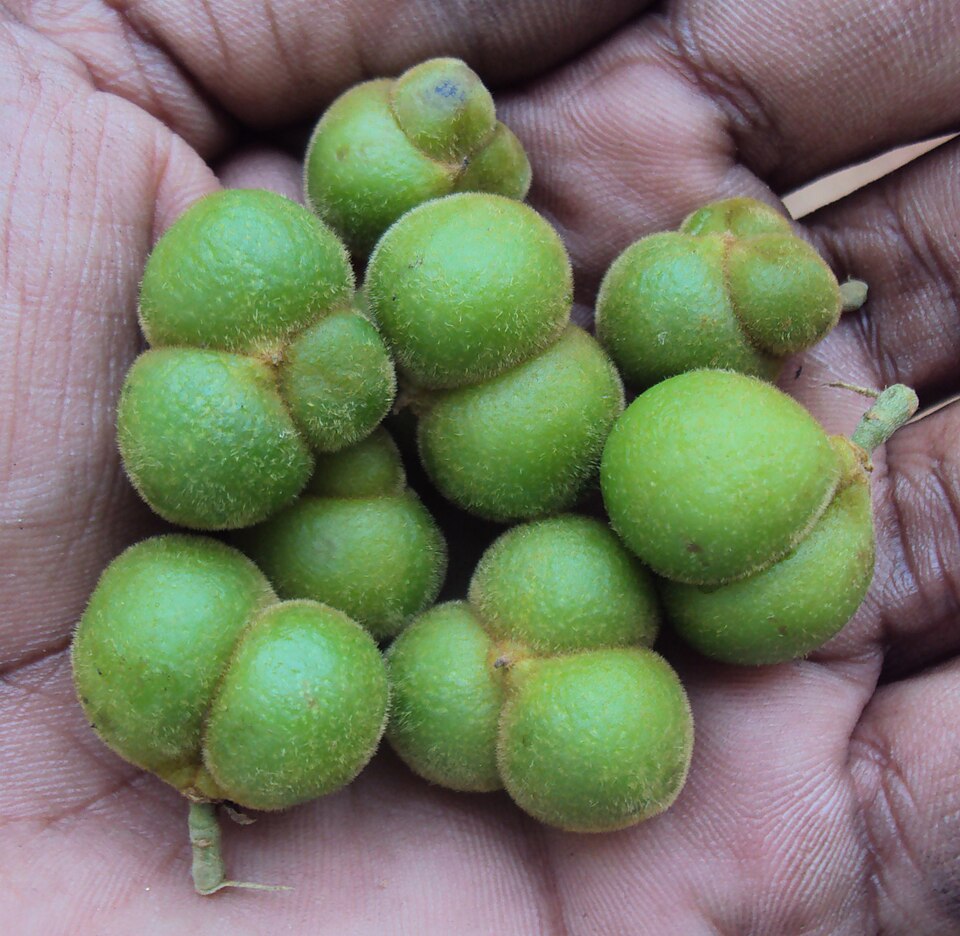

Sapindus trifoliatus, the South India soapnut or three-leaf soapberry, is a species of flowering plant in the family Sapindaceae, native to Pakistan, India, Bangladesh, the Andaman Islands, Myanmar, and Sri Lanka, and introduced to eastern tropical Africa, Rodrigues, and Trinidad and Tobago. An evergreen tree reaching 25 m (82 ft), its seeds are rich in saponins, and are both collected in the wild and cultivated to make soap for washing fabrics.
From Wikipedia, under CC BY-SA 4.0.
Is it poisonous?
We have no record of South India soapnut being toxic, poisonous or venomous. That is not proof that it is safe. Never eat, touch or handle a wild plant, mushroom or animal on the strength of an identification; ask someone qualified.
Easily confused with
- Sapindus emarginatus
- Talisia esculenta
- Lepisanthes tetraphylla
- Schleichera oleosa
- Trichilia emetica
- Terminalia chebula
Classification
- Kingdom
- Plantae
- Phylum
- Tracheophyta
- Class
- Magnoliopsida
- Order
- Sapindales
- Family
- Sapindaceae
- Genus
- Sapindus
- Species
- Sapindus trifoliatus
Found one? Take a photo and B.inomen will suggest what it is, free.
Check your photo