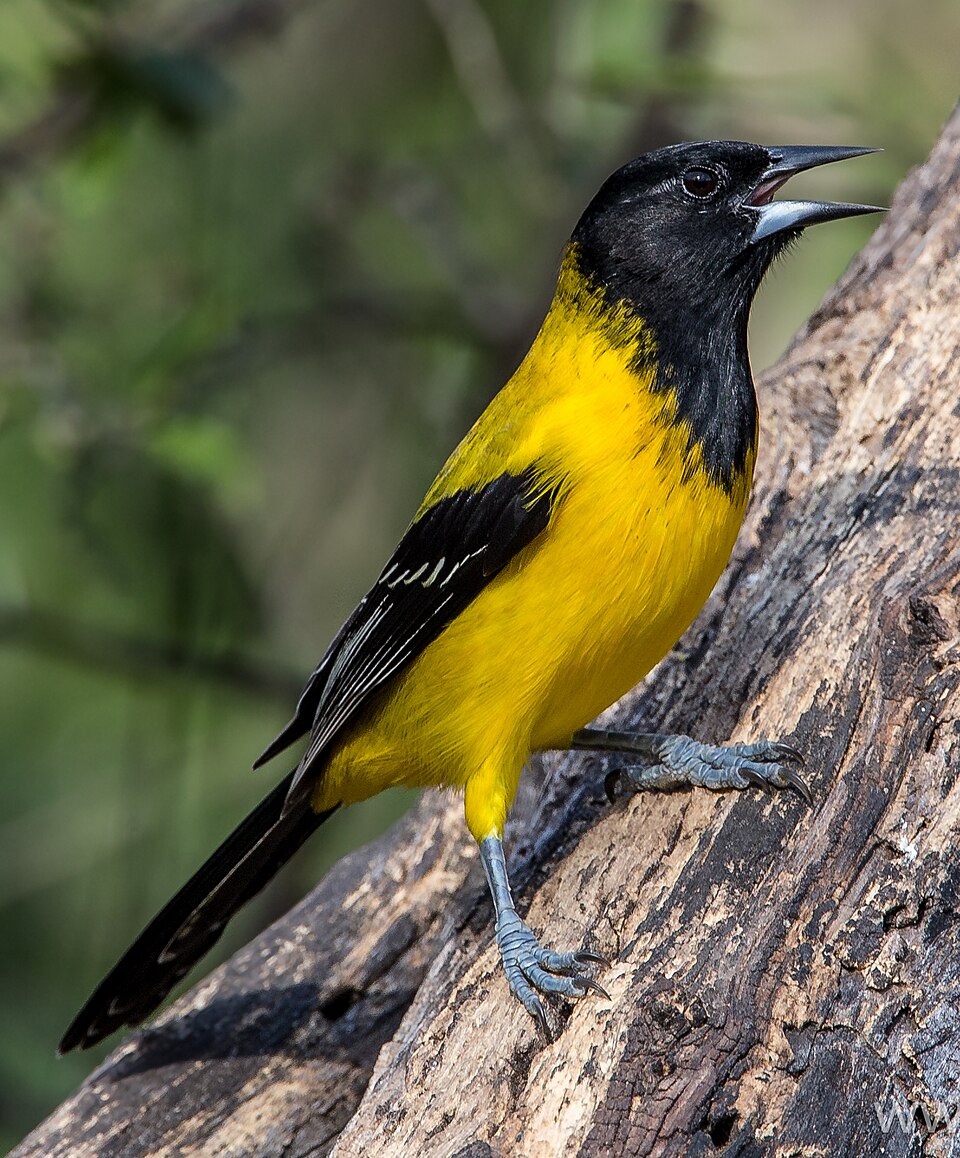

Audubon's oriole (Icterus graduacauda), formerly known as the black-headed oriole, is a New World passerine inhabiting the forests and thickets of southeastern Texas and the Mexican coast. It is the only species to have a black hood and yellow body. It is divided into four subspecies and two allopatric breeding ranges. The westernmost range extends from Nayarit south to southern Oaxaca, whereas the eastern range stretches from the lower Rio Grande valley to northern Querétaro. The most common in the western range are the subspecies I. g. dickeyae and I. g. nayaritensis; I. g. graduacauda and I. g. audubonii can be found in the eastern range.
From Wikipedia, under CC BY-SA 4.0.
Is it venomous or poisonous?
We have no record of Audubon's Oriole being toxic, poisonous or venomous. That is not proof that it is safe. Never eat, touch or handle a wild plant, mushroom or animal on the strength of an identification; ask someone qualified.
Easily confused with
Classification
- Kingdom
- Animalia
- Phylum
- Chordata
- Class
- Aves
- Order
- Passeriformes
- Family
- Icteridae
- Genus
- Icterus
- Species
- Icterus graduacauda
Found one? Take a photo and B.inomen will suggest what it is, free.
Check your photo