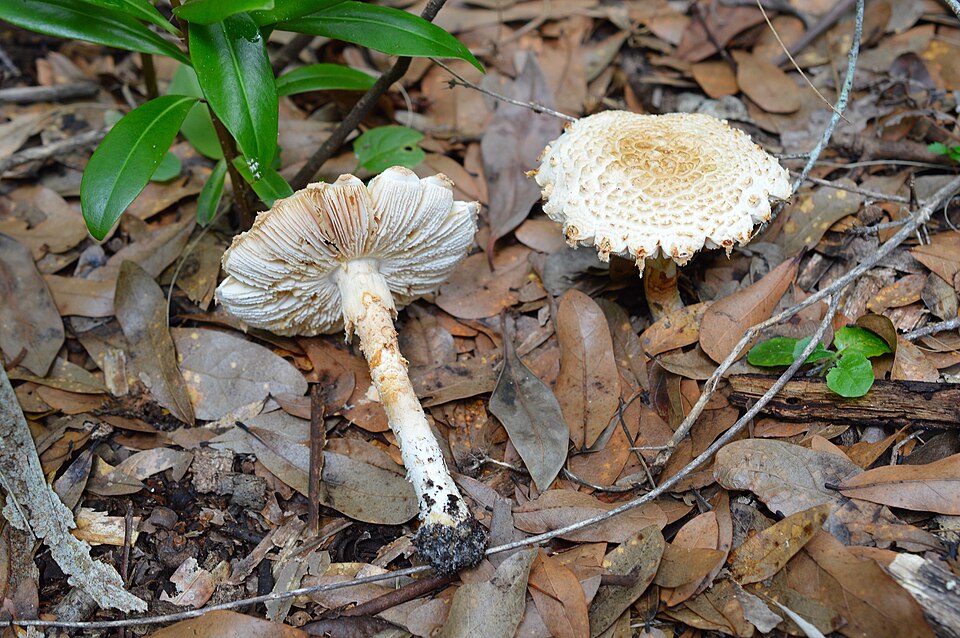

Saproamanita nauseosa is a species of agaric fungus in the family Amanitaceae. First described by English mycologist Elsie Maud Wakefield in 1918 as a species of Lepiota, it was named for its nauseating odor. The type specimen was found growing on soil in the Nepenthes greenhouse at Kew Gardens. Derek Reid transferred the species to Amanita in 1966, and then in 2016 the separate genus Saproamanita was created by Redhead et al. for saprophytic Amanitas and it was transferred to this new genus.
From Wikipedia, under CC BY-SA 4.0.
Is it poisonous?
We have no record of Saproamanita nauseosa being toxic, poisonous or venomous. That is not proof that it is safe. Never eat, touch or handle a wild plant, mushroom or animal on the strength of an identification; ask someone qualified.
Easily confused with
- Saproamanita foetidissima
- Amanita foetens — considered toxic
- Saproamanita vittadinii
- Macrolepiota zeyheri
- Chlorophyllum nothorhacodes
Classification
- Kingdom
- Fungi
- Phylum
- Basidiomycota
- Class
- Agaricomycetes
- Order
- Agaricales
- Family
- Amanitaceae
- Genus
- Saproamanita
- Species
- Saproamanita nauseosa
Found one? Take a photo and B.inomen will suggest what it is, free.
Check your photo