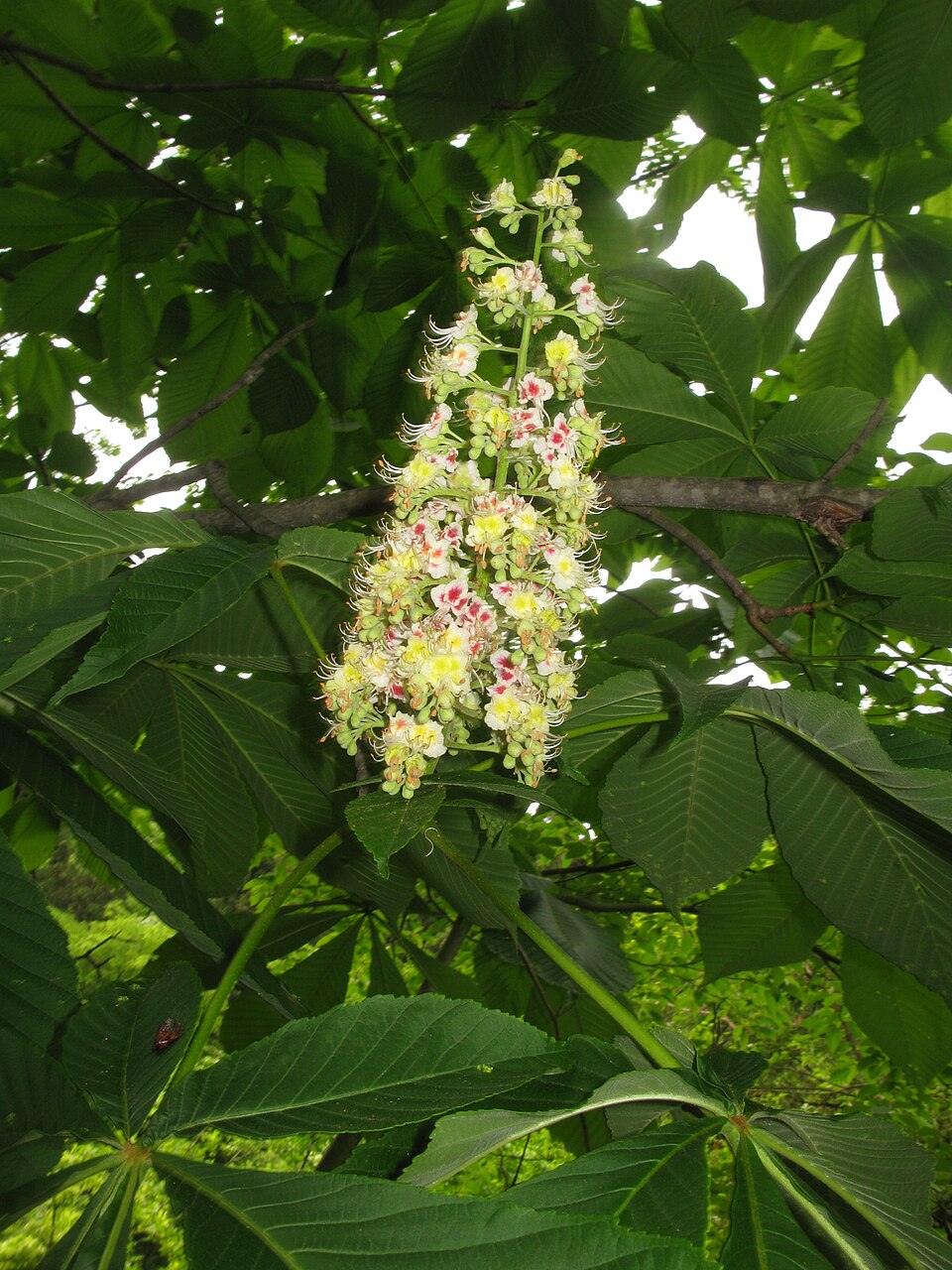

Aesculus turbinata, common name Japanese horse-chestnut (tochinoki (トチノキ, 栃の木) or tochi (トチ, 栃, 橡)), is native to Japan but cultivated elsewhere. It is a tree up to 30 metres (98 feet) tall. Flowers are white to pale yellowish with red spots. Capsules are dark brown, obovoid to pyriform. The seeds were traditionally eaten, after leaching, by the Jōmon people of Japan over about four millennia, until 300 AD. Today the seeds are used in Japanese cuisine to prepare tochimochi.
From Wikipedia, under CC BY-SA 4.0.
Is it poisonous?
Toxic. The note covers its whole genus. Horse chestnut; aesculin in seeds and leaves Never eat, touch or handle a wild plant, mushroom or animal on the strength of an identification; ask someone qualified.
Easily confused with
- Aesculus indica — toxic
- Aesculus flava — toxic
- Aesculus chinensis — toxic
- Aesculus glabra — toxic
- Aesculus hippocastanum — considered toxic
- Aesculus parviflora — toxic
Classification
- Kingdom
- Plantae
- Phylum
- Tracheophyta
- Class
- Magnoliopsida
- Order
- Sapindales
- Family
- Sapindaceae
- Genus
- Aesculus
- Species
- Aesculus turbinata
Found one? Take a photo and B.inomen will suggest what it is, free.
Check your photo