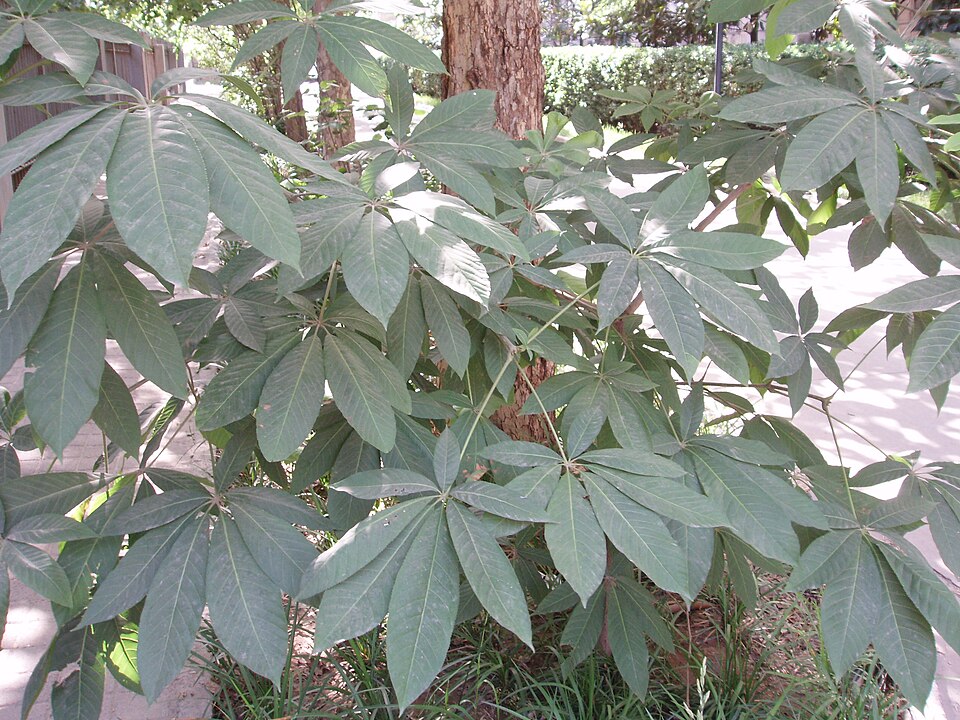

Aesculus chinensis, the Chinese horse chestnut or Chinese buckeye (traditional Chinese: 七葉樹; simplified Chinese: 七叶树; pinyin: qi ye shu), is a deciduous temperate tree species in the genus Aesculus found across China. It was first successfully introduced to Britain in 1912 by plant collector William Purdom, who collected six young plants from the grounds of a temple in the western hills of Beijing, and brought them back to Veitch's Nursery in Coombe Hill near London. Purdom's correspondence regarding this event are held in the archives of the Arnold Arboretum. One plant was sent to the Royal Botanic Gardens Kew and two to the Arnold Arboretum in Boston.
From Wikipedia, under CC BY-SA 4.0.
Is it poisonous?
Toxic. The note covers its whole genus. Horse chestnut; aesculin in seeds and leaves Never eat, touch or handle a wild plant, mushroom or animal on the strength of an identification; ask someone qualified.
Easily confused with
- Aesculus indica — toxic
- Aesculus turbinata — toxic
- Aesculus parviflora — toxic
- Aesculus flava — toxic
Classification
- Kingdom
- Plantae
- Phylum
- Tracheophyta
- Class
- Magnoliopsida
- Order
- Sapindales
- Family
- Sapindaceae
- Genus
- Aesculus
- Species
- Aesculus chinensis
Found one? Take a photo and B.inomen will suggest what it is, free.
Check your photo