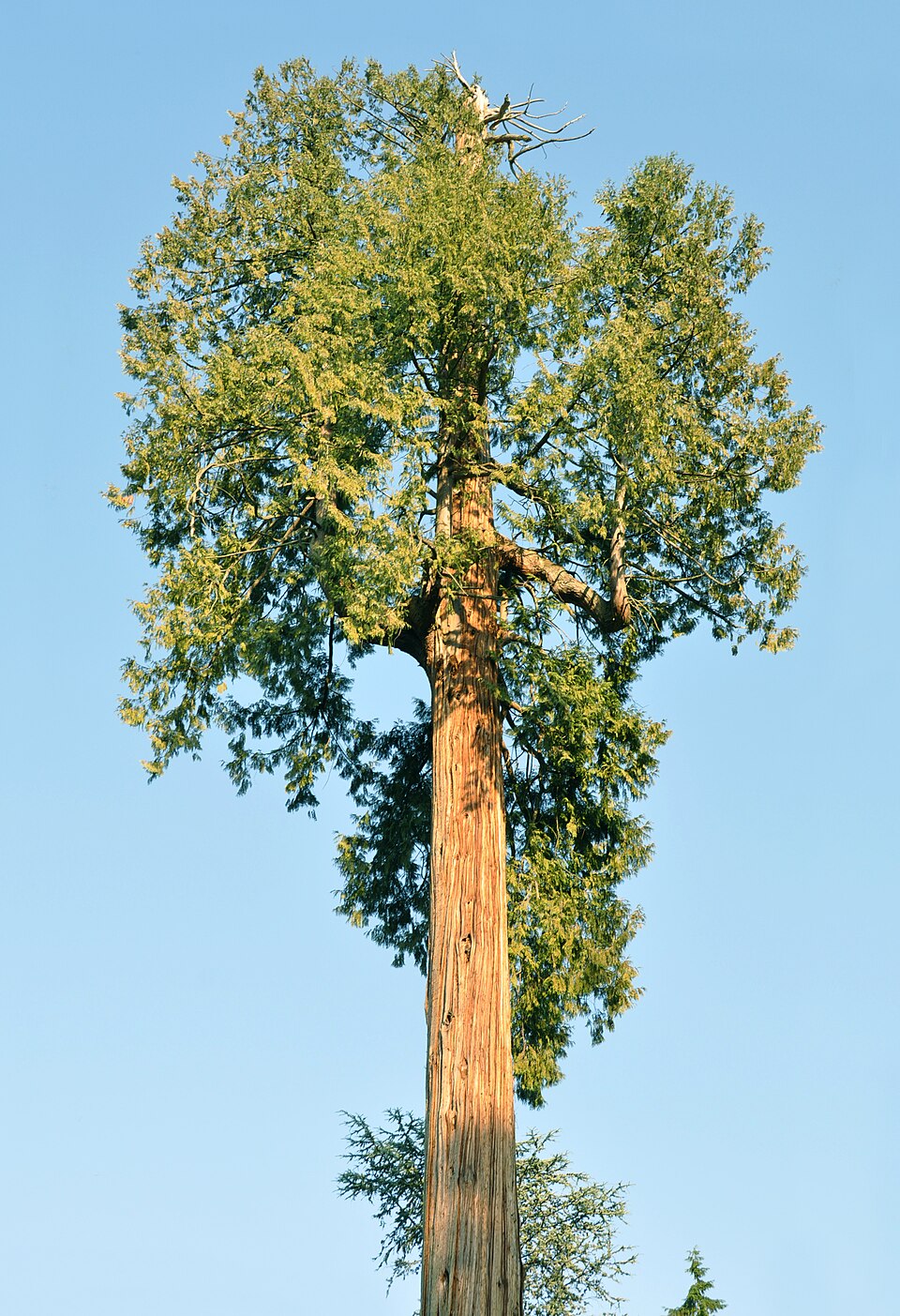

Thuja plicata is a large coniferous tree in the cypress family, Cupressaceae, native to the Pacific Northwest of North America. Its common name is western redcedar, although it is not a true cedar. It is also less commonly called western red cedar, pacific red cedar, giant arborvitae, western arborvitae, just cedar, giant cedar, or shinglewood. T. plicata is the largest species in the genus Thuja, growing up to 70 metres (230 ft) tall and 7 m (23 ft) in diameter. It mostly grows in areas that experience a mild climate with plentiful rainfall, although it is sometimes present in drier areas on sites where water is available year-round, such as wet valley bottoms and mountain streamsides.
From Wikipedia, under CC BY-SA 4.0.
Is it poisonous?
We have no record of Western redcedar being toxic, poisonous or venomous. That is not proof that it is safe. Never eat, touch or handle a wild plant, mushroom or animal on the strength of an identification; ask someone qualified.
Easily confused with
- Chamaecyparis lawsoniana
- Callitropsis nootkatensis
- × Hesperotropsis leylandii
- Chamaecyparis pisifera
- Thuja occidentalis
Classification
- Kingdom
- Plantae
- Phylum
- Tracheophyta
- Class
- Pinopsida
- Order
- Pinales
- Family
- Cupressaceae
- Genus
- Thuja
- Species
- Thuja plicata
Found one? Take a photo and B.inomen will suggest what it is, free.
Check your photo